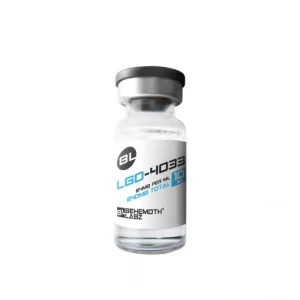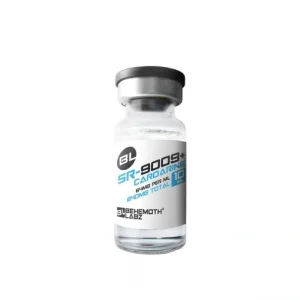

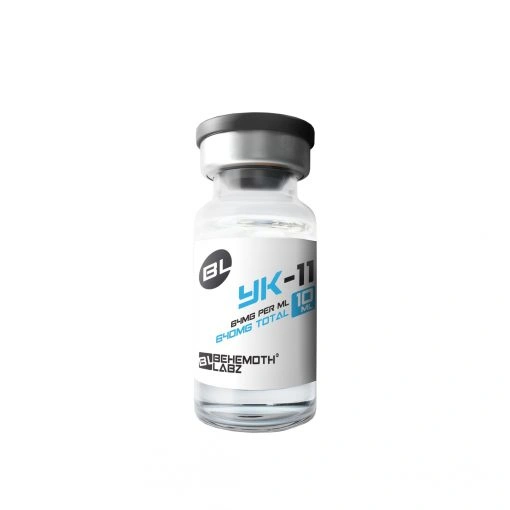
Injectable YK-11, also referred to as Myostine and YK11 myostatine, is a steroidal selective androgen receptor modulator (SARM) studied in preclinical models for its interaction with androgen receptor binding sites and its influence on myostatin-related signaling pathways. Unlike most non-steroidal SARMs, YK-11’s structural resemblance to dihydrotestosterone (DHT) places it in a distinct mechanistic category — one that has drawn sustained interest in receptor pharmacology and muscle biology research since its first characterization in 2011.
Researchers looking to buy injectable YK-11 for laboratory use can access Behemoth Labz’s research-grade parenteral solution, manufactured under controlled conditions with independent third-party purity verification and a Certificate of Analysis (COA) available for every batch.
What Is Injectable YK-11 (Myostine)?
YK-11 Injectable is a research-grade parenteral formulation of a steroidal SARM first synthesized and characterized by Kanno et al. at Toho University. It is not a peptide. Its molecular architecture — a D-ring-modified steroid scaffold with a methyl ester side chain — enables it to bind the ligand-binding domain of the androgen receptor (AR) with high affinity, while simultaneously appearing to interact with follistatin-related gene expression pathways in experimental cell models.
Key identifiers at a glance:
| Attribute | Details |
|---|---|
| Compound Name | YK-11 |
| Common Synonyms | Myostine, YK11 myostatine, Myostinus |
| Classification | Steroidal SARM (Selective Androgen Receptor Modulator) |
| Molecular Formula | C₂₅H₃₄O₆ |
| Molecular Weight | 430.5 g/mol |
| CAS Number | 1370003-76-1 |
| PubChem CID | 119058028 |
| IUPAC Name | methyl (2E)-2-[(8R,9S,10R,13S,14S,17S)-2′-methoxy-2′,13-dimethyl-3-oxospiro[…]acetate |
| Primary Targets | Androgen receptor (AR); myostatin/follistatin signaling pathway |
| Research Format | Sterile injectable parenteral solution (vial) |
| Also Available As | YK-11 Capsules, YK-11 Liquid |
| Storage | 2–8°C; dry, dark environment; protect from light |
How Does Injectable YK-11 Work? — Mechanism of Action
YK-11 engages the androgen receptor through a two-stage molecular interaction, analyzed in vitro using C2C12 myoblast cell lines in published research.
Stage 1 — Androgen Receptor Binding
The binding event begins at the hydrophobic ligand-binding pocket of the androgen receptor. YK-11’s steroidal backbone docks within this pocket and induces a partial agonist conformational change — specifically, it promotes an interaction between Helix 3 and Helix 5 of the ligand-binding domain without fully stabilizing the AF-2 co-activator surface. This partial activation profile is what distinguishes YK-11 from full AR agonists such as DHT, and it is the structural basis of its classification as a SARM rather than a classical androgen. In receptor selectivity studies, this incomplete AF-2 stabilization is hypothesized to underlie tissue-selective transcriptional responses, though the evidence remains preliminary and model-dependent.
Stage 2 — Follistatin Pathway Modulation
In parallel to AR engagement, Kanno et al. (2013) observed that YK-11 stimulates the expression of follistatin — an endogenous inhibitor of myostatin — in C2C12 myoblast cell cultures. Myostatin (GDF-8) is a TGF-β superfamily member that negatively regulates skeletal muscle cell differentiation in animal models. By modulating follistatin expression downstream of AR activation, YK-11 appears to intersect two distinct regulatory axes simultaneously. It is this dual-pathway profile — androgen receptor partial agonism plus follistatin upregulation — that positions injectable YK-11 as a compound of specific interest in muscle biology and receptor pharmacology research.
What Are the Research Applications of Injectable YK-11?
Androgen Receptor Selectivity Studies
Injectable YK-11 is applied in ligand-binding assays and receptor activation panels to evaluate SARM pharmacology. Its partial agonist behavior relative to full steroidal AR agonists provides a comparative reference point for studies examining tissue-selective androgen receptor activation — a mechanistic question central to the broader SARM research field.
Myostatin and Follistatin Pathway Investigation
In myoblast differentiation models, YK-11 serves as an experimental probe for follistatin gene expression and its downstream suppression of myostatin-mediated growth inhibition signaling. Within TGF-β superfamily research, YK-11 is one of the few SARM-class compounds that intersects both the androgen receptor axis and the myostatin regulatory loop simultaneously.
Comparative Pharmacokinetic Profiling — Injectable YK-11 vs Oral
The parenteral format allows researchers to isolate systemic compound exposure from gastrointestinal and hepatic metabolism variables. Studies comparing injectable YK-11 dosage to oral or liquid formats use the parenteral vial formulation to establish unmetabolized baseline pharmacokinetic parameters — data that oral administration studies cannot cleanly produce due to first-pass variability.
Receptor-Mediated Transcription Analysis
YK-11’s partial AR agonism profile makes it applicable in transcription factor studies investigating how differential ligand binding affects co-regulator recruitment, gene expression profiles, and downstream mRNA synthesis in androgen-responsive cell lines.
What Is the Injectable YK-11 Dosage Used in Research?
The table below reflects dosage parameters and format comparisons reported across published preclinical and in vitro protocols. These figures are strictly for laboratory and research reference only. They do not constitute dosage guidance for human or animal use.
Injectable YK-11 Dosage by Research Format
| Research Format | Reported Experimental Range | Concentration | Research Notes |
|---|---|---|---|
| Injectable (Parenteral) | Varies by study design | mg/mL (per vial specification) | Bypasses first-pass metabolism; preferred for PK baseline studies |
| Oral / Capsule | Varies by study design | mg/capsule | Subject to hepatic first-pass; metabolite formation variable |
| Liquid / Solution | Varies by study design | mg/mL | Comparable to oral; GI absorption-dependent |
| In Vitro (Cell Culture) | nM–μM range | Applied in solution | Used in dose-response profiling; Kanno et al. used 500 nM concentration |
Injectable YK-11 vs Oral — Format Comparison for Research Design
| Parameter | Injectable Format | Oral / Liquid Format |
|---|---|---|
| First-Pass Metabolism | Bypassed | Present (hepatic) |
| Bioavailability in PK Studies | Higher; more consistent | Variable; metabolite-dependent |
| Onset in Systemic Models | Faster | Slower; absorption-dependent |
| Use in PK Profiling | Preferred baseline arm | Comparative arm |
| Sterility Requirement | Sterile parenteral preparation required | Standard formulation |
| Available at Behemoth Labz | ✓ Injectable Vial | ✓ YK-11 Capsules |
What to Look for in a Supplier When Buying Research-Grade Injectable YK-11?
Check that every batch is independently third-party tested for purity and identity, and that a Certificate of Analysis is available for each lot. You can try trusted sites BehemothLabz, where all compounds are sold strictly for preclinical and in vitro research use.
- Third-party COA-verified: Every injectable YK-11 vial batch is independently tested for compound identity, purity, and concentration accuracy prior to release
- Pharmaceutical-grade parenteral solution: Sterile preparation under controlled conditions appropriate for parenteral research applications
- Full documentation: Sourcing transparency and batch-specific laboratory documentation support experimental reproducibility
- Researcher support: support@behemothlabz.com
What Are the Risks of Working with Injectable YK-11?
- Handling Precautions: Injectable YK-11 should be handled by trained laboratory personnel only, in a controlled research environment with appropriate institutional biosafety oversight. Use full PPE at all times — including chemical-resistant gloves, safety glasses, and a laboratory coat. Avoid direct skin contact with the parenteral solution. Do not allow any reconstituted material to contact mucous membranes or open wounds.
- Exposure Risks: YK-11 is a steroidal selective androgen receptor modulator (SARM) thought to interact with androgen receptor binding sites and follistatin-related signaling pathways in preclinical models. No human safety data exists for this compound in any clinical or occupational exposure context. Accidental exposure should be managed per institutional chemical exposure protocols and documented accordingly.
- Storage: Store injectable YK-11 vials at 2–8°C in a dry, dark environment. Protect from light, heat, and repeated freeze-thaw cycling. Keep vials sealed until point of use. Do not use beyond the stated expiration date on the COA or product label.
- Toxicity and Data Limitations: No chronic toxicity data exist for YK-11 in human subjects. All published findings are derived from short-duration in vitro studies and animal model experiments only. Long-term safety profiles, human metabolite data, organ-level toxicity, and interaction effects with co-administered research compounds have not been established. All experimental work should proceed under appropriate institutional review and biosafety clearance.
- Endocrine Interaction Risk: As an androgen receptor modulator with a steroidal backbone, YK-11 may influence hypothalamic-pituitary-gonadal (HPG) axis signaling in animal model studies. Experimental protocols should account for potential hormonal axis perturbation during and following the research period, and appropriate biomarker monitoring should be included in the study design.
Frequently Asked Questions — Injectable YK-11
What is injectable YK-11 (Myostine) used for in research?
Injectable YK-11 is studied in preclinical models for its interaction with the androgen receptor and its observed influence on follistatin expression, associated with myostatin pathway modulation. Applications include receptor binding assays, myoblast differentiation studies, and comparative pharmacokinetic profiling. It is not approved for human use.
What is the difference between injectable YK-11 and oral YK-11?
The injectable format bypasses hepatic first-pass metabolism, allowing the compound to enter systemic circulation unmodified. This makes it the preferred format for pharmacokinetic studies requiring clean baseline plasma-level data. Oral and liquid formats undergo GI and hepatic processing, introducing metabolic variability. Both formats are available from Behemoth Labz for parallel experimental arms.
What is the injectable YK-11 dosage used in research studies?
Dosage parameters depend on the experimental model and study design. In vitro work by Kanno et al. used 500 nM concentrations in C2C12 cell culture. Preclinical animal models use weight-based dosing. All dosage references are for laboratory research guidance only and do not represent any guidance for human use.
Is YK-11 the same as Myostine?
Yes. Myostine — also written as YK11 myostatine or Myostinus — is the common synonym used in pharmaceutical and European research contexts. The compound is identical, sharing the same molecular structure (C₂₅H₃₄O₆, CAS 1370003-76-1). Behemoth Labz’s injectable YK-11 and YK-11 (Myostine) Capsules are the same research compound in different delivery formats.
Do I need a PCT-equivalent protocol after YK-11 research in animal models?
In animal model studies involving androgen receptor modulators, published preclinical protocols commonly include a post-administration recovery phase to monitor HPG axis biomarkers such as LH, FSH, and testosterone. The specific protocol depends on study design and institutional requirements. This is not guidance for human use of any kind.
What concentration is the injectable YK-11 vial?
Refer to the current product listing and the batch-specific Certificate of Analysis for the confirmed active concentration (mg/mL), purity percentage, and identity verification data. The COA is available for every production batch.
Is injectable YK-11 a SARM or a myostatin inhibitor?
Both designations apply in a research context. YK-11 is structurally classified as a steroidal SARM due to its DHT-derived scaffold and androgen receptor binding activity. It is simultaneously studied as an indirect myostatin pathway modulator through its influence on follistatin expression downstream of AR activation. This dual-pathway profile distinguishes it from conventional non-steroidal SARMs such as Ostarine or Ligandrol within the SARM pharmacology research field.
References
- Kanno Y, et al. “In Vitro Effects of YK11 on C2C12 Myoblast Differentiation.” Biological and Pharmaceutical Bulletin. 2011;34(3):318–23. PubMed
- Kanno Y, et al. “Selective androgen receptor modulator, YK11, regulates myogenic differentiation of C2C12 myoblasts by follistatin expression.” Biological and Pharmaceutical Bulletin. 2013;36(9):1460–5. PubMed
LABORATORY AND RESEARCH PURPOSES ONLY
Injectable YK-11 (Myostine) sold by Behemoth Labz is intended strictly for in vitro laboratory research and preclinical investigation only. It is not for human or veterinary use under any circumstances. It is not intended to diagnose, treat, cure, or prevent any disease or medical condition. This compound has not been evaluated or approved by the U.S. Food and Drug Administration (FDA) for any therapeutic, diagnostic, or clinical application. All purchasers confirm upon completing their order that they are qualified research professionals acquiring this compound solely for lawful laboratory use. Misuse, resale for human consumption, or use outside a laboratory research context is strictly prohibited and is the sole legal responsibility of the purchaser.