
Buy Livagen Peptide (20mg) Online | BehemothLabz
Livagen is a synthetic tetrapeptide bioregulator. Researchers also refer to it by its amino acid sequence KEDA, or its full peptide notation H-Lys-Glu-Asp-Ala-OH. It belongs to the family of organ-specific short peptide bioregulators developed by the Khavinson research group at the Saint Petersburg Institute of Bioregulation and Gerontology. This family of compounds was derived from analysis of tissue-specific peptide fractions, and the KEDA sequence was identified from liver tissue fractions as a candidate for studying gene regulatory activity in hepatic and lymphocyte-based experimental systems.
So, why do researchers find Livagen useful? Because it provides a defined, low-molecular-weight, water-soluble probe for investigating how short peptides interact with chromatin structures, influence transcriptional accessibility, and modulate gene expression in aged and young cell populations in preclinical settings. In hepatocyte culture models, nanomolar concentrations of Livagen have been observed to influence protein synthesis rates in aged rat liver cells, making it a tool for comparative age-associated gene expression research.
ATTENTION: This product is strictly for LABORATORY AND RESEARCH PURPOSES ONLY. Not for human or veterinary use.
Mechanism of Action of Livagen (KEDA)
How Does Livagen Interact with Chromatin Regulatory Machinery?
Livagen is thought to interact with chromatin-associated elements in cell nuclei in experimental settings. Within the Khavinson peptide bioregulator framework, short peptides of two to seven amino acid residues are proposed to penetrate cell nuclei, interact with nucleosomes and histone proteins, and engage both single-stranded and double-stranded DNA in a sequence-recognition-dependent manner. For Livagen, this interaction is specifically hypothesized to induce decondensation of heterochromatin — a process that increases the transcriptional accessibility of previously silenced or condensed gene loci. This mechanism is studied using chromatin accessibility assays and nucleolar activity measurements in lymphocyte and hepatocyte experimental systems.
Enkephalin-Degrading Enzyme Inhibition in Experimental Models
In preclinical biochemical assay systems, Livagen has been observed to inhibit enkephalin-degrading enzymes with noted efficiency. This activity is thought to occur through an indirect mechanism that does not involve direct opioid receptor binding, distinguishing it from conventional opioid receptor ligands. This enzyme inhibition activity is a secondary area of investigation within Livagen research and is separate from its proposed chromatin interaction mechanism. These observations remain limited to in vitro biochemical settings.
Properties of Livagen (KEDA)
| Property | Detail |
| Molecular Formula | C₁₈H₃₁N₅O₉ |
| Molecular Weight | 461.5 g/mol |
| CAS Number | 195875-84-4 |
| PubChem CID | 87919683 |
| IUPAC Name | (4S)-5-[[(2S)-3-carboxy-1-[[(1S)-1-carboxyethyl]amino]-1-oxopropan-2-yl]amino]-4-[[(2S)-2,6-diaminohexanoyl]amino]-5-oxopentanoic acid |
| Peptide Sequence | H-Lys-Glu-Asp-Ala-OH |
| Synonyms | KEDA, Lys-Glu-Asp-Ala, Liver peptide bioregulator, KEDA tetrapeptide |
| Peptide Class | Linear tetrapeptide; liver-specific bioregulator |
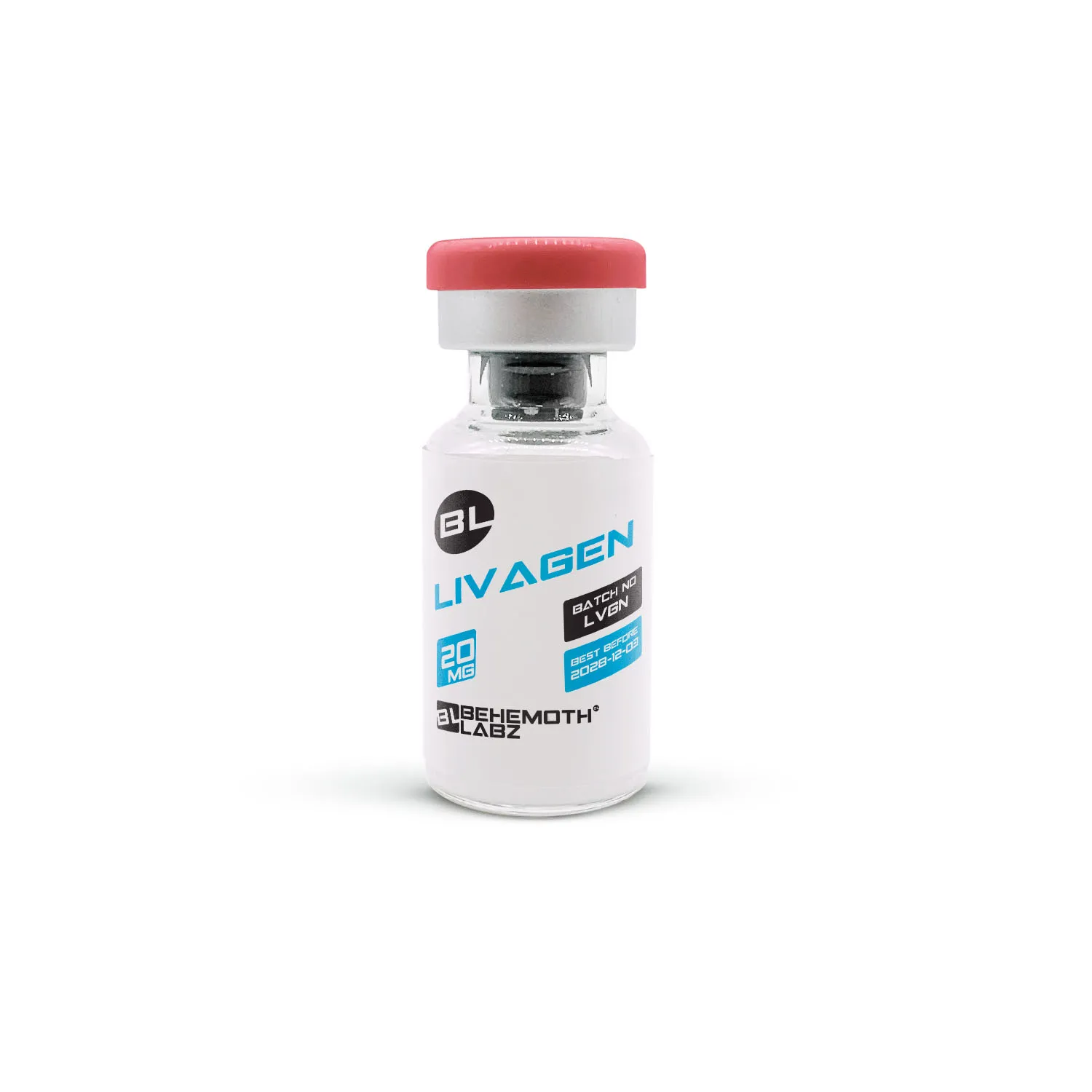
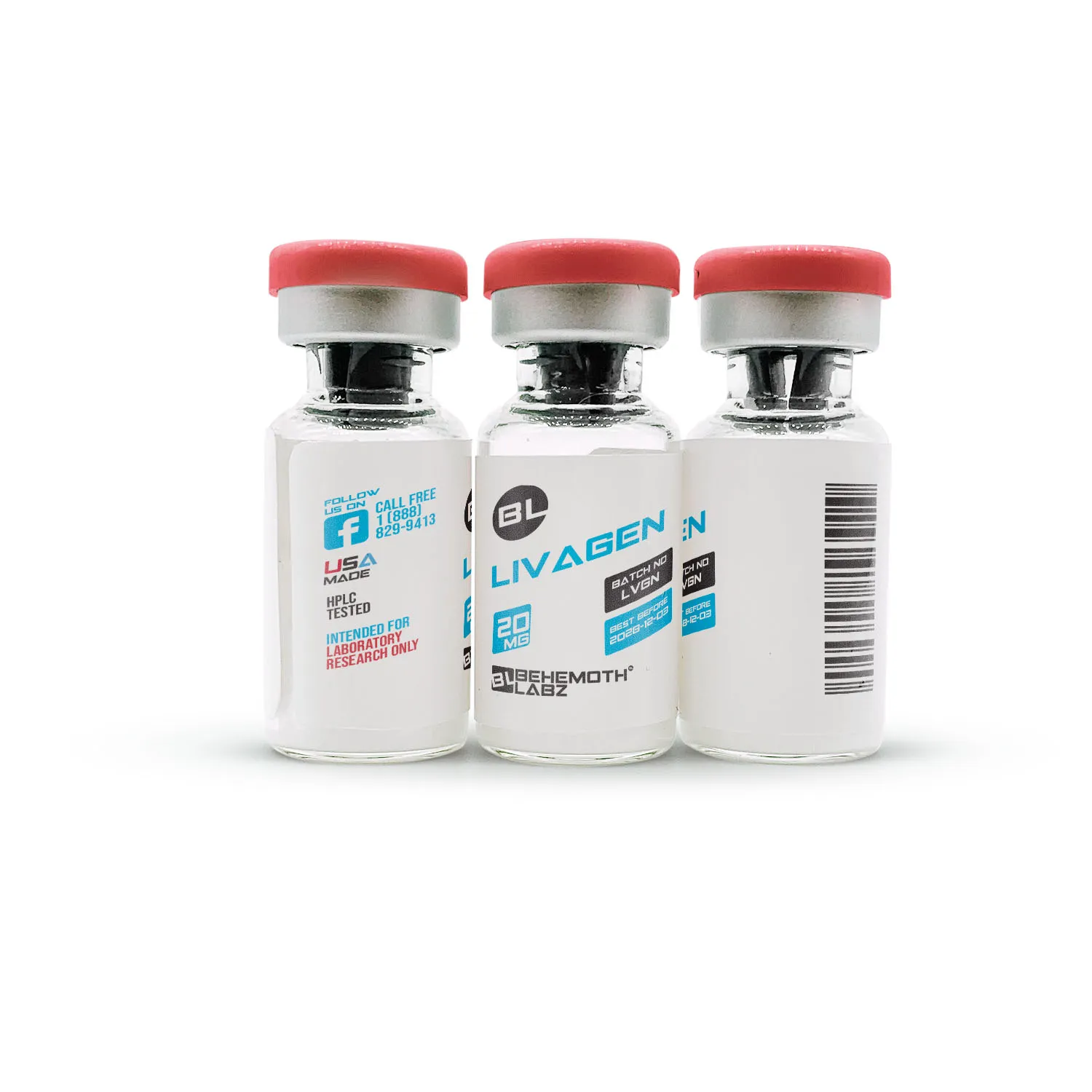
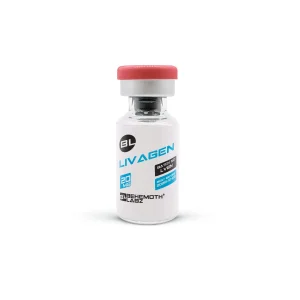
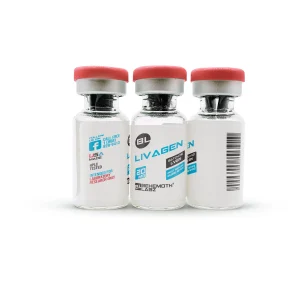
| Vial Size | 20mg |
| Form | Lyophilized Powder |
| Purity | ≥99% (HPLC) |
| Shelf Life | ≥24 months lyophilized under recommended conditions |
| Storage | −20°C; protect from light and moisture |
| WADA Status | Not listed on WADA 2026 Prohibited List. Verify via GlobalDRO.com prior to sport science research use. |
Research Findings on Livagen (KEDA)
Research has examined Livagen in the context of chromatin regulation in human lymphocyte models from both young and aged donors. Studies investigating the effects of the KEDA tetrapeptide on chromatin structure have observed that Livagen induces decondensation of heterochromatin in lymphocyte cultures. This effect was associated with increased nucleolar organizer region activity and changes in chromosomal stability markers. These observations were noted to be more pronounced in lymphocytes from older donors compared to young controls, suggesting age-dependent differential chromatin responsiveness to the peptide. These findings are from ex vivo cell culture models only and data remains limited [Khavinson et al., 2021].
Further investigation has examined the mechanistic framework underpinning short peptide interactions with chromatin across the Khavinson bioregulator series. A systematic review documented that short peptides of two to seven residues are capable of penetrating cell nuclei and interacting with nucleosomal components, histone proteins, and DNA in a sequence-specific manner. DNA-peptide interactions at gene promoter regions are proposed to influence transcriptional output relevant to cellular aging and tissue homeostasis. The KEDA sequence is studied within this framework as a liver-targeted regulatory probe. All findings are from preclinical and cell-based experimental settings [Khavinson et al., 2021].
Note: Livagen is not approved by the FDA for any use. It is intended strictly for laboratory research purposes only and is not for human consumption.
Risk and Handling Information
Risk Tier: LOW TO MODERATE
Livagen is a short tetrapeptide composed entirely of naturally occurring amino acids. Its acute toxicological profile in humans has not been formally established. The natural amino acid composition suggests a low immunogenic potential, though this has not been confirmed through formal toxicological assessment. All handling must be conducted under appropriate laboratory safety conditions.
Exposure Risk
Lyophilized powder presents an inhalation hazard during weighing and reconstitution. These steps must be performed inside a certified fume hood. N95 respiratory protection is recommended as a minimum. Nitrile gloves, a lab coat, and safety eyewear must be worn during all handling. Avoid direct skin and eye contact with both the powder and reconstituted solution at all times.
Toxicity Uncertainty
No acute or chronic toxicity data exists for Livagen in human subjects. The absence of known adverse effects must not be interpreted as confirmed safety for human exposure. Any uncontrolled exposure must be documented and managed per institutional first-aid and incident reporting protocols.
Storage Risk
Store lyophilized material at −20°C in sealed vials, protected from light and moisture. Reconstituted solution must be used within 7 days and kept at 4°C. Repeated freeze-thaw cycling must be avoided. Single-use aliquoting before initial reconstitution is strongly recommended.
Disposal
All residual material, vials, and contaminated consumables must be disposed of in full compliance with institutional biosafety regulations and applicable chemical waste management protocols.
Why Choose BehemothLabz to Buy Livagen Peptide?
BehemothLabz supplies Livagen (KEDA) for laboratory and research use only. Each batch undergoes independent third-party HPLC analysis. A Certificate of Analysis is available for every production lot. BehemothLabz does not self-certify purity and external laboratories verify each lot before release.
Disclaimer
Please make sure you go through the Terms and Conditions and familiarize yourself with them, as it is important. Please research the scientific uses of this product before making any purchases. Make note that the packaging and labels of the product may differ from those shown on the website. All research involving this compound must comply with IRB guidelines for clinical investigations and IACUC directives for animal studies under the Animal Welfare Act (AWA).
Buying the product means you agree to our Terms and Conditions. You can contact our customer service team at support@behemothlabz.com if you are not fully satisfied with the product.
ATTENTION: All BehemothLabz products are strictly for LABORATORY AND RESEARCH PURPOSES ONLY. They are not to be used for any human or veterinary purposes.
Reference Links
Khavinson, V. K., Popovich, I. G., Linkova, N. S., Mironova, E. S., & Ilina, A. R. (2021). Peptide regulation of gene expression: A systematic review. Molecules, 26(22), 7053. https://pubmed.ncbi.nlm.nih.gov/34834147/
Khavinson, V., Linkova, N., Dyatlova, A., Kantemirova, R., & Kozlov, K. (2023). Senescence-associated secretory phenotype of cardiovascular system cells and inflammaging: Perspectives of peptide regulation. Cells, 12(1), 106. https://pubmed.ncbi.nlm.nih.gov/36611900/