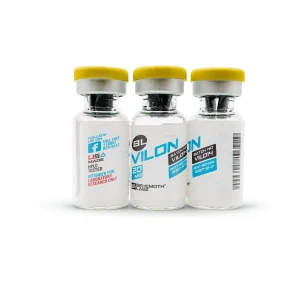

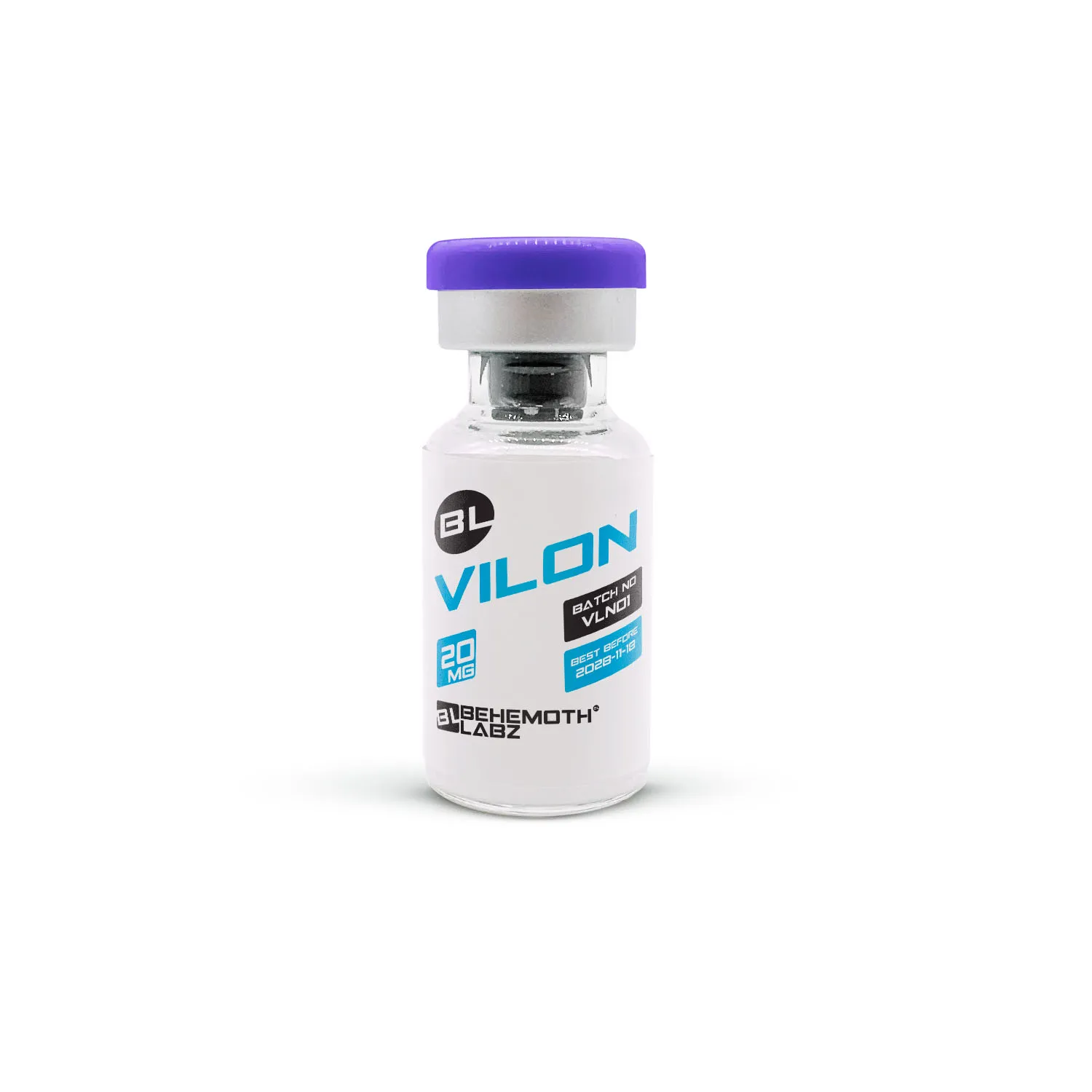
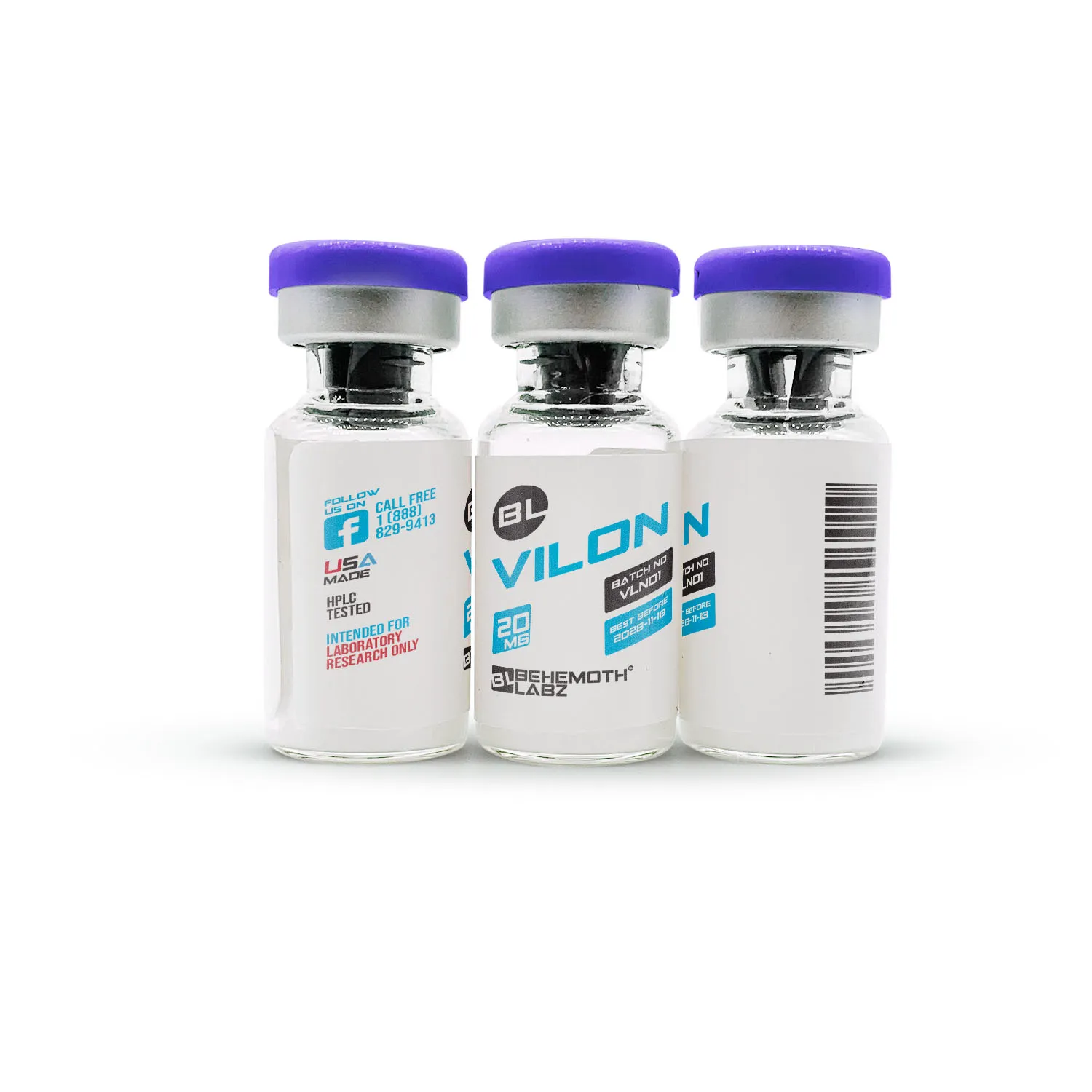
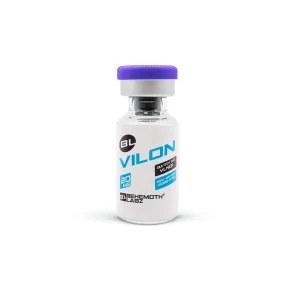
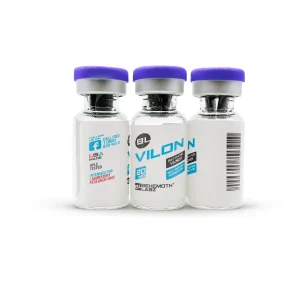
Product Details: Vilon (20mg)
Vilon is a lab-synthesized synthetic dipeptide bioregulator composed of the amino acid sequence Lysine–Glutamic Acid (Lys-Glu), also designated as KE in single-letter amino acid code.
It represents one of the smallest biologically active compounds in the Khavinson family of short-chain cytomedine peptide bioregulators, a class of tissue-specific investigational compounds developed through research conducted at the St. Petersburg Institute of Bioregulation and Gerontology under Professor Vladimir Khavinson.
Vilon was originally derived from amino acid analysis of Thymalin, a complex natural thymic extract studied for immunomodulatory properties.
As a synthetic dipeptide analog, Vilon is structurally defined, sequence-invariant across production lots, and classified as a thymus-targeted cytomedine, with laboratory research focusing predominantly on its interactions with lymphoid tissue biology, T-cell developmental programming, and gene expression dynamics in immune aging models.
Preclinical investigational interest in Vilon centers on its proposed role in chromatin architecture remodeling, interleukin-2 (IL-2) gene expression regulation, and immunosenescence modulation in controlled research settings.
Research on the Lys-Glu sequence proposes direct nuclear localization with interaction at chromatin regulatory sites relevant to immune tissue function under controlled laboratory conditions.
This compound is supplied exclusively for controlled laboratory and scientific research purposes and is not intended for any other application.
Mechanism of Action
In preclinical and experimental research settings, Vilon is characterized as an epigenetic chromatin remodeling agent and thymus-targeted immunomodulatory cytomedine research tool.
Investigational data from Lezhava et al. (2004) document that Vilon induces deheterochromatinization of total heterochromatin in cultured lymphocytes from elderly research subjects, specifically activating ribosomal genes through nucleolus organizer region (NOR) decondensation, releasing genes repressed by euchromatic region condensation, forming facultative heterochromatin, and producing progressive activation of facultative heterochromatin correlated with aging stage under controlled in vitro conditions. [Lezhava et al., 2004; PMID: 15105581].
Properties of Vilon (20mg)
| Field | Details |
| Molecular Formula | C₁₁H₂₁N₃O₅ |
| Molecular Weight | 257.30 g/mol |
| CAS Number | 45234-02-4 |
| PubChem CID | 7010502 |
| Amino Acid Sequence | Lys-Glu (KE) |
| Peptide Class | Khavinson Cytomedine Dipeptide Bioregulator / Thymic Bioregulator |
| IUPAC Name | (2S)-2-[[(2S)-2,6-diaminohexanoyl]amino]pentanedioic acid |
| Synonyms | Vilon; H-Lys-Glu-OH; Lysylglutamic Acid; L-Lys-L-Glu; KE Peptide; Lysylglutamate |
| Purity | ≥98.8% (confirmed by third-party analytical testing) |
| Form | Lyophilized powder |
Research Applications of Vilon (20mg)
Thymic Chromatin Remodeling and Immunosenescence Research
Vilon is utilized in laboratory settings to investigate heterochromatin deheterochromatinization dynamics in cultured lymphocytes from aged cellular models. It may also be applied to explore nucleolus organizer region (NOR) gene reactivation mechanisms, facultative heterochromatin decondensation pathway dynamics, and age-correlated chromatin condensation reversal in thymus-targeted immune cell systems under controlled in vitro experimental conditions.
Interleukin-2 Gene Expression Studies
Applied in preclinical research settings to examine IL-2 mRNA synthesis activation in splenocyte and lymphocyte cell culture systems, trans-acting factor nuclear transport dynamics associated with the KE dipeptide sequence [Kazakova et al., 2002], and concentration- and duration-dependent cytokine gene expression modulation patterns in controlled immunological research models.
T-Cell and Lymphoid Tissue Biology Research
Utilized in controlled experimental settings to study thymocyte differentiation and T-cell subset programming dynamics, thymus-derived bioregulator interactions with lymphoid tissue gene expression networks, and comparative immunomodulatory activity profiles relative to structurally related thymic cytomedine compounds, including Thymogen (Glu-Trp) and Thymalin in experimental immune research panels.
Preclinical investigation in murine models has additionally examined the effects of Vilon (L-Lys-L-Glu) on spontaneous tumor growth and longevity parameters. These findings are from preclinical animal models only, require independent replication, and do not constitute evidence of anti-tumor or lifespan-extending activity in any clinical context. [Khavinson & Anisimov, 2000]
Epigenetic Gene Regulation and Aging Cell Model Research
Vilon may serve as an investigational research tool for analyzing short-chain peptide epigenetic modulation of gene expression, ribosomal gene activation through chromatin decondensation, and transcriptional silencing reversal mechanisms in immunosenescence research models under controlled laboratory conditions.
Why Choose BehemothLabz to Buy Vilon (20mg)?
BehemothLabz is committed to providing high-purity research peptides manufactured under strict quality control standards. Each batch of Vilon undergoes independent third-party analytical testing to confirm identity, purity, and consistency.
With a focus on transparency and scientific reliability, BehemothLabz supports researchers with dependable compounds suitable for advanced laboratory and preclinical investigations. Competitive pricing, secure payment processing, and domestic and international shipping availability further support researchers at every level.
Support is direct: support@behemothlabz.com | (307) 429-0990
Disclaimer
This compound is not approved by the U.S. Food and Drug Administration (FDA) for any purpose. It is provided strictly for laboratory and scientific research purposes only. Clinical research initiatives must be conducted under IRB guidance; preclinical studies must comply with IACUC directives under the Animal Welfare Act (AWA). Not for any form of administration outside of controlled laboratory research settings.
Please make sure you review the Terms and Conditions and familiarize yourself with them prior to purchasing. Please research the scientific uses of this product before placing any orders. Please note that the packaging and labels of the product may differ from those shown on the website.
FAQs
Is Vilon legal in the United States?
Vilon is a research chemical not approved by the FDA for use outside of controlled laboratory settings. It is not approved for human or veterinary administration under any circumstances.
What is Vilon, and what is it investigated for in preclinical research?
Vilon is a synthetic Lys-Glu dipeptide bioregulator belonging to the Khavinson cytomedine peptide family, originally derived from amino acid analysis of the thymic extract Thymalin. In preclinical research settings, it is investigated for its proposed interactions with chromatin architecture in lymphoid tissue cellular models, IL-2 gene expression regulation in splenocyte and thymocyte experimental systems, and epigenetic gene reactivation dynamics in immune aging research models under controlled laboratory conditions.
What signaling mechanisms is Vilon associated with in preclinical investigational data?
Preclinical data associate Vilon with deheterochromatinization of total and facultative heterochromatin in aged lymphocyte cultures, ribosomal gene reactivation through NOR decondensation, IL-2 mRNA synthesis activation in splenocyte cell systems in the absence of specific inductors, proposed promotion of trans-acting factor nuclear transport associated with the KE dipeptide sequence, and modulation of T-cell and lymphoid tissue gene expression networks under controlled in vitro and in vivo preclinical research conditions.
How does Vilon compare to related Khavinson thymic cytomedine compounds?
Vilon shares structural and functional classification with other thymic Khavinson cytomedines, notably Thymogen (Glu-Trp) and the parent complex Thymalin. As the shortest defined synthetic thymic cytomedine at two amino acids, Vilon’s minimal molecular structure (275.30 g/mol) is proposed to facilitate direct nuclear penetration and chromatin interaction without receptor-mediated endocytosis in research models. Its KE sequence is structurally embedded within longer cytomedine tetrapeptides studied for related immunomodulatory mechanisms, providing a comparative research context within the Khavinson thymic bioregulator class.
What are the storage and handling requirements for Vilon?
Vilon is supplied as a lyophilized powder. Store at –20°C or below, protected from light and moisture. Reconstitute using bacteriostatic water under sterile aseptic laboratory conditions. Once reconstituted, aliquot immediately to minimize freeze-thaw degradation and do not store the reconstituted solution at ambient temperature. Researchers are advised to consult the applicable Safety Data Sheet (SDS) prior to handling and to comply with all relevant institutional biosafety protocols.
Reference Links
Lezhava, T., Khavinson, V., Monaselidze, J., Jokhadze, T., Dvalishvili, N., Bablishvili, N., & Barbakadze, S. (2004). Bioregulator Vilon-induced reactivation of chromatin in cultured lymphocytes from old people. Biogerontology, 5(2), 73–79. https://pubmed.ncbi.nlm.nih.gov/15105581/
Khavinson, V. K., Morozov, V. G., Malinin, V. V., Kazakova, T. B., & Korneva, E. A. (2000). Effect of peptide Lys-Glu on interleukin-2 gene expression in lymphocytes. Bulletin of Experimental Biology and Medicine, 130(9), 898–899. https://pubmed.ncbi.nlm.nih.gov/11177276/
Kazakova, T. B., Barabanova, S. V., Khavinson, V. Kh., Glushikhina, M. S., Parkhomenko, E. P., Malinin, V. V., & Korneva, E. A. (2002). In vitro effect of short peptides on expression of interleukin-2 gene in splenocytes. Bulletin of Experimental Biology and Medicine, 133(6), 614–616. https://pubmed.ncbi.nlm.nih.gov/12447482/
Khavinson, V. Kh., & Anisimov, V. N. (2000). A synthetic dipeptide Vilon (L-Lys-L-Glu) inhibits growth of spontaneous tumors and increases life span of mice. Doklady Biological Sciences, 372, 261–263. https://pubmed.ncbi.nlm.nih.gov/10944717/