
Buy PTD-1 (PTD-DBM) Peptide (10mg) Online | BehemothLabz
PTD-1 (PTD-DBM) is a synthetic cell-penetrating peptide. Researchers also call it Protein Transduction Domain-fused Dishevelled Binding Motif peptide. It was developed by the Choi laboratory at Yonsei University in South Korea. The name describes its structure directly: PTD refers to a polyarginine protein transduction domain that enables cellular entry, and DBM refers to a Dishevelled-binding motif sequence that serves as a competitive blocker of a specific protein-protein interaction.
So, why do researchers find PTD-DBM useful? Because it provides a tool for selectively disrupting the interaction between CXXC5 and Dishevelled (Dvl) at the intracellular level in experimental settings. CXXC5 is a negative feedback regulator of the Wnt/β-catenin signaling pathway. When CXXC5 binds to Dvl, it suppresses downstream Wnt/β-catenin activity. PTD-DBM competitively occupies the Dvl binding site, thereby preventing CXXC5 from exerting this suppression. This makes it a targeted probe for studying Wnt/β-catenin pathway derepression in preclinical and cell-based research models.
ATTENTION: This product is strictly for LABORATORY AND RESEARCH PURPOSES ONLY. Not for human or veterinary use.
Mechanism of Action of PTD-DBM
How Does PTD-DBM Disrupt CXXC5-Dishevelled Binding?
PTD-DBM functions as a competitive inhibitor of the CXXC5-Dvl protein-protein interaction in preclinical experimental models. Dvl is a key scaffolding protein in the canonical Wnt signaling cascade. CXXC5 binds to Dvl and suppresses pathway activity as part of a negative feedback loop. The DBM domain of PTD-DBM mimics the CXXC5 binding interface and competes for the same site on Dvl. When bound, the DBM domain prevents CXXC5 from interacting with Dvl, which releases the inhibition on the pathway. As a result, β-catenin accumulates and translocates to the nucleus where it activates TCF/LEF-responsive target gene transcription in experimental systems.
PTD Domain and Intracellular Delivery
The PTD component of the peptide consists of an octaarginine stretch that enables the molecule to cross the plasma membrane via macropinocytosis and direct membrane translocation mechanisms, without requiring specific surface receptors. This intracellular delivery capability allows the DBM domain to reach its cytoplasmic target. The PTD strategy has been validated in multiple in vitro and in vivo preclinical systems as a method for delivering bioactive sequences to intracellular compartments.
Properties of PTD-DBM
| Property | Detail |
| Molecular Formula | C₁₂₄H₂₂₃N₆₁O₂₈S₂ |
| Molecular Weight | 3,080.7 g/mol |
| CAS Number | 1609454-11-6 |
| PubChem CID | Not independently assigned |
| Peptide Sequence | H-Arg-Arg-Arg-Arg-Arg-Arg-Arg-Arg-Gly-Gly-Gly-Gly-Arg-Lys-Thr-Gly-His-Gln-Ile-Cys-Lys-Phe-Arg-Lys-Cys-OH |
| IUPAC Name | Not independently assigned; sequence-defined chimeric CPP |
| Synonyms | PTD-DBM, Protein Transduction Domain-fused Dishevelled Binding Motif, PTD-1 |
| Peptide Class | Cell-penetrating peptide; CXXC5-Dvl competitive inhibitor; Wnt pathway modulator |
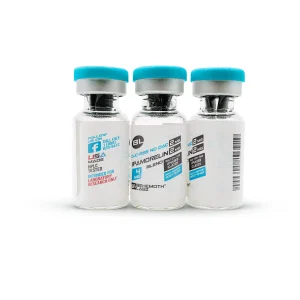
| Vial Size | 10mg |
| Form | Lyophilized Powder |
| Purity | ≥99% (LC-MS) |
| Shelf Life | ≥24 months lyophilized under recommended conditions |
| Storage | −20°C; protect from light and moisture |
| WADA Status | Not listed on WADA 2026 Prohibited List. Verify via GlobalDRO.com prior to sport science research use. |
Research Findings on PTD-DBM
Research has examined PTD-DBM in the context of hair follicle biology and Wnt/β-catenin pathway modulation. In a study examining CXXC5 as a negative regulator of Wnt/β-catenin signaling, CXXC5 was found to be upregulated in miniaturized hair follicles and arrector pili muscles in human balding scalp samples. CXXC5 knockout mice displayed accelerated hair regrowth. Treatment with a competing peptide disrupting the CXXC5-Dvl interaction activated the Wnt/β-catenin pathway and accelerated hair regrowth and wound-induced hair follicle neogenesis in murine models. These findings are from preclinical animal and in vitro settings only [Lee et al., 2017].
Further investigation using small molecule inhibitors of the same CXXC5-Dvl interaction explored the mechanistic consequences of blocking this protein-protein interface. Disruption of CXXC5-Dvl binding was associated with activation of β-catenin signaling in cell-based assays and with downstream effects on cellular proliferation and differentiation markers in preclinical models. PTD-DBM is studied as a peptide-based tool within this same mechanistic framework. These findings are from cell-based and small animal experimental settings only and data remains limited [Kim et al., 2016].
Note: PTD-DBM is not approved by the FDA for any use. It is intended strictly for laboratory research purposes only and is not for human consumption.
Risk and Handling Information
Risk Tier: MODERATE TO HIGH
PTD-DBM is a cell-penetrating peptide with active intracellular pharmacology. Its PTD domain enables membrane translocation without receptor specificity, meaning that accidental dermal or mucosal exposure could result in uncharacterized intracellular delivery of the bioactive DBM domain to exposed tissue. The complete toxicological profile in humans has not been established. Additionally, Wnt/β-catenin pathway dysregulation is associated with oncogenic processes in multiple tissue types. Researchers must implement containment protocols appropriate for compounds capable of modulating cancer-relevant signaling pathways.
Exposure Risk
All handling must be performed inside a certified fume hood or biosafety cabinet. Double nitrile gloves are required at all times due to the cell-penetrating properties of the PTD domain. Full lab coat and safety eyewear are mandatory. Skin and mucosal contact must be strictly avoided. Any skin contact should be treated as a potential unintended intracellular delivery event and managed per institutional first-aid protocols.
Storage Risk
Store lyophilized material at −20°C in sealed vials, protected from light and moisture. Reconstituted solution must be used within 7 days and kept at 4°C. Repeated freeze-thaw cycling must be avoided. Single-use aliquoting before initial reconstitution is strongly recommended.
Disposal
All residual material, vials, syringes, and contaminated consumables must be disposed of in full compliance with applicable institutional biosafety regulations and chemical waste management protocols.
Why Choose BehemothLabz to Buy PTD-DBM?
BehemothLabz supplies PTD-DBM for laboratory and research use only. Each batch undergoes independent third-party LC-MS analysis confirming purity, molecular weight, and sequence integrity. A Certificate of Analysis is available for every production lot. BehemothLabz does not self-certify purity and external laboratories verify each lot before release.
Disclaimer
Please make sure you go through the Terms and Conditions and familiarize yourself with them, as it is important. Please research the scientific uses of this product before making any purchases. Make note that the packaging and labels of the product may differ from those shown on the website. All research involving this compound must comply with IRB guidelines for clinical investigations and IACUC directives for animal studies under the Animal Welfare Act (AWA).
Buying the product means you agree to our Terms and Conditions. You can contact our customer service team at support@behemothlabz.com if you are not fully satisfied with the product.
ATTENTION: All BehemothLabz products are strictly for LABORATORY AND RESEARCH PURPOSES ONLY. They are not to be used for any human or veterinary purposes.
Reference Links
Lee, S. H., Seo, S. H., Lee, D. H., Pi, L. Q., Lee, W. S., & Choi, K. Y. (2017). Targeting of CXXC5 by a competing peptide stimulates hair regrowth and wound-induced hair neogenesis. Journal of Investigative Dermatology, 137(11), 2260–2269. https://pubmed.ncbi.nlm.nih.gov/28595998/
Kim, H. Y., Choi, S., Yoon, J. H., Lim, H. J., Lee, H., Choi, J., Ro, E. J., Heo, J. N., Lee, W., No, K. T., & Choi, K. Y. (2016). Small molecule inhibitors of the Dishevelled-CXXC5 interaction are new drug candidates for bone anabolic osteoporosis therapy. EMBO Molecular Medicine, 8(4), 375–387. https://pubmed.ncbi.nlm.nih.gov/26988132/