
Buy N-Acetyl PT-141 Online | BehemothLabz
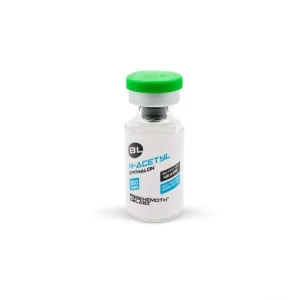
N-Acetyl PT-141 is a synthetic cyclic heptapeptide. Researchers also know it as bremelanotide. It is a structurally engineered analog of alpha-melanocyte-stimulating hormone (α-MSH), developed specifically for research use. Its structure features an N-terminal acetyl group on a norleucine residue and a lactam bridge between aspartic acid and lysine residues, forming a constrained cyclic backbone. This cyclic structure confers conformational rigidity that is thought to enhance receptor binding selectivity in experimental settings.
So, why do researchers find N-Acetyl PT-141 useful? This is because it binds selectively to central melanocortin receptor subtypes, particularly MC3R and MC4R, with reduced affinity for MC1R compared to broader-spectrum melanocortin agonists such as Melanotan II. This selective receptor profile makes it a valuable probe for dissecting central melanocortin signaling pathways in preclinical models.
Important Regulatory Notice: N-Acetyl PT-141 shares the same chemical identity as bremelanotide (CAS 189691-06-3), the active pharmaceutical ingredient in Vyleesi (NDA 210557), an FDA-approved prescription medication indicated for hypoactive sexual desire disorder (HSDD) in premenopausal women. BehemothLabz supplies this compound exclusively as a research-grade material for controlled laboratory research use only. The research-grade formulation supplied here is distinct from the FDA-approved pharmaceutical product and is not approved, indicated, or supplied for any human therapeutic application. Researchers should be aware of this regulatory distinction before purchasing or using this compound.
ATTENTION: This product is strictly for LABORATORY AND RESEARCH PURPOSES ONLY. Not for human or veterinary use.
Mechanism of Action of N-Acetyl PT-141
How Does N-Acetyl PT-141 Interact with Melanocortin Receptors?
N-Acetyl PT-141 is thought to act as an agonist at MC3R and MC4R in preclinical experimental systems. These receptors are predominantly expressed in the central nervous system, particularly in the hypothalamus. In laboratory studies, receptor binding at MC4R is associated with downstream elevation of intracellular cAMP levels in cell-based assay systems. The N-terminal acetylation and norleucine substitution are thought to confer proteolytic resistance, particularly against aminopeptidase-mediated degradation.
Central Dopaminergic Pathway Modulation
In rodent preclinical models, N-Acetyl PT-141 administration has been observed to stimulate dopamine release in the medial preoptic area (mPOA) of the hypothalamus. This interaction is thought to occur through MC3R and MC4R engagement upstream of dopaminergic terminals in this brain region. These are animal model observations only and do not constitute evidence of activity in human subjects.
Properties of N-Acetyl PT-141
| Property | Detail |
| Molecular Formula | C₅₀H₆₈N₁₄O₁₀ |
| Molecular Weight | 1,025.2 g/mol |
| CAS Number | 189691-06-3 |
| PubChem CID | 9941379 |
| IUPAC Name | (3S,6S,9R,12S,23S)-15-[(N-acetyl-L-norleucyl)amino]-9-benzyl-6-{3-[(diaminomethylidene)amino]propyl}-12-(1H-imidazol-5-ylmethyl)-3-(1H-indol-3-ylmethyl)-2,5,8,11,14,17-hexaoxo-1,4,7,10,13,18-hexaazacyclotricosane-23-carboxylic acid |
| Synonyms | Bremelanotide, PT-141, Ac-Nle-cyclo[Asp-His-D-Phe-Arg-Trp-Lys]-OH |
| Peptide Class | Cyclic heptapeptide; α-MSH analog; MC3R/MC4R agonist |
| Vial Size | 10mg |
| Form | Lyophilized Powder |
| Purity | ≥99% (HPLC) |
| Shelf Life | ≥24 months lyophilized under recommended conditions |
| Storage | −20°C; protect from light and moisture |
| WADA Status | Not listed on the WADA 2026 Prohibited List. Verify via GlobalDRO.com prior to sport science research use. |
Research Findings on N-Acetyl PT-141
Research has examined the role of N-Acetyl PT-141 in central melanocortin receptor signaling using rodent behavioral models. In ovariectomized, hormone-primed female rats, PT-141 was observed to selectively stimulate appetitive solicitational behaviors without altering lordosis, pacing, or generalized motor activity. This behavioral specificity was linked to MC3R and MC4R engagement in the medial preoptic area and other hypothalamic regions. These observations are from animal models only, and data remains limited [Pfaus et al., 2004].
Further investigation has examined the broader role of the central melanocortin system in metabolic and neuroendocrine signaling contexts. Research has established that MC3R and MC4R are expressed across hypothalamic and limbic circuits governing energy balance and reproductive behavior in preclinical systems. N-Acetyl PT-141 serves as an investigational probe for characterizing these receptor-mediated pathways in laboratory settings. Findings across different model systems are not consistent [Sweeney et al., 2023].
Note: N-Acetyl PT-141 is not approved by the FDA for human or veterinary use. It is intended strictly for laboratory research purposes only and is not for human consumption. It is intended strictly for laboratory research purposes only and is not for human consumption.
Risk and Handling Information
Risk Tier: MODERATE
N-Acetyl PT-141 is a pharmacologically active cyclic peptide with agonist activity at central melanocortin receptors. Its complete toxicological profile in humans at research concentrations has not been established. All handling must be conducted under appropriate laboratory safety conditions.
Exposure Risk
Lyophilized powder presents an inhalation hazard. All weighing, reconstitution, and handling must be performed inside a certified fume hood or biosafety cabinet. N95 respiratory protection is required during any powder manipulation. Direct skin and eye contact must be avoided at all times. Nitrile gloves, a lab coat, and safety eyewear are mandatory during all handling procedures.
Cardiovascular and CNS Considerations
The parent compound bremelanotide has been associated with transient blood pressure changes and nausea in controlled clinical settings. As a closely related analog, N-Acetyl PT-141 must be treated as carrying uncharacterized cardiovascular and CNS risks in any uncontrolled exposure context. Researchers must implement appropriate containment protocols and report any accidental exposure per institutional safety guidelines.
Storage Risk
Improper storage above −20°C or exposure to moisture accelerates peptide degradation and structural breakdown. Vials must be stored sealed, protected from light, and at the recommended temperature. Reconstituted solution must be used within 7 days and stored at 4°C. Repeated freeze-thaw cycling must be avoided. Single-use aliquoting is strongly recommended before initial reconstitution.
Disposal
All residual material, vials, syringes, and contaminated consumables must be disposed of in full compliance with applicable institutional biosafety regulations and chemical waste management protocols.
Why Choose BehemothLabz to Buy N-Acetyl PT-141?
BehemothLabz supplies N-Acetyl PT-141 for laboratory and research use only. Each batch undergoes independent third-party HPLC analysis. A Certificate of Analysis is available for every production lot. BehemothLabz does not self-certify purity, and external laboratories verify each lot before release.
Disclaimer
Please make sure you go through the Terms and Conditions and familiarize yourself with them, as it is important. Please research the scientific uses of this product before making any purchases. Make note that the packaging and labels of the product may differ from those shown on the website. All research involving this compound must comply with IRB guidelines for clinical investigations and IACUC directives for animal studies under the Animal Welfare Act (AWA).
Buying the product means you agree to our Terms and Conditions. You can contact our customer service team at support@behemothlabz.com if you are not fully satisfied with the product.
ATTENTION: All BehemothLabz products are strictly for LABORATORY AND RESEARCH PURPOSES ONLY. They are not to be used for any human or veterinary purposes.
Reference Links
Pfaus, J. G., Shadiack, A., Van Soest, T., Tse, M., & Molinoff, P. (2004). Selective facilitation of sexual solicitation in the female rat by a melanocortin receptor agonist. Proceedings of the National Academy of Sciences, 101(27), 10201–10204. https://pubmed.ncbi.nlm.nih.gov/15226502/
Sweeney, P., Gimenez, L. E., Hernandez, C. C., & Cone, R. D. (2023). Targeting the central melanocortin system for the treatment of metabolic disorders. Nature Reviews Endocrinology, 19(9), 507–519. https://pubmed.ncbi.nlm.nih.gov/37365323