
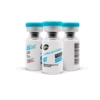
$111.99
Buy Larazotide Acetate (AT-1001, 10mg) Online | BehemothLabz
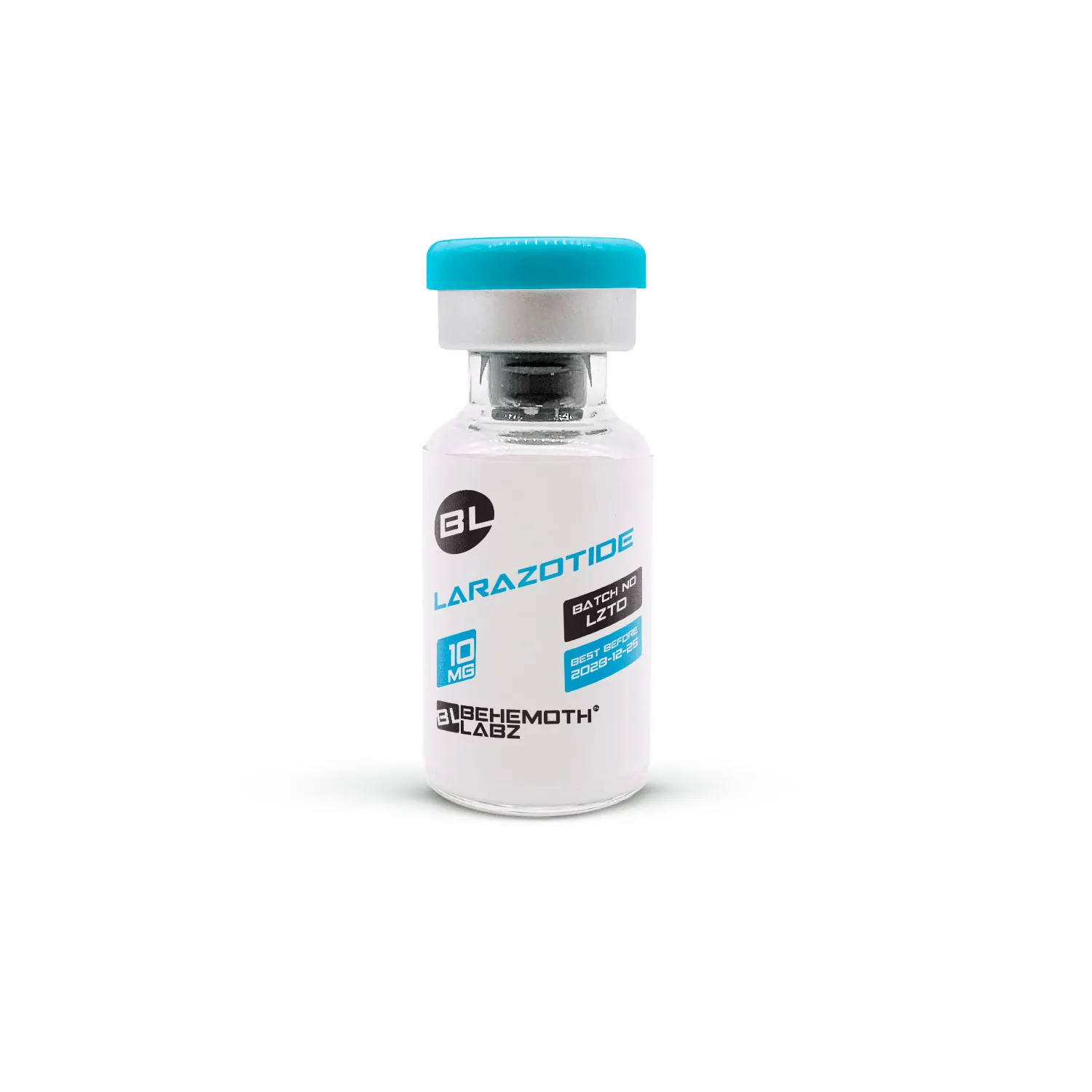
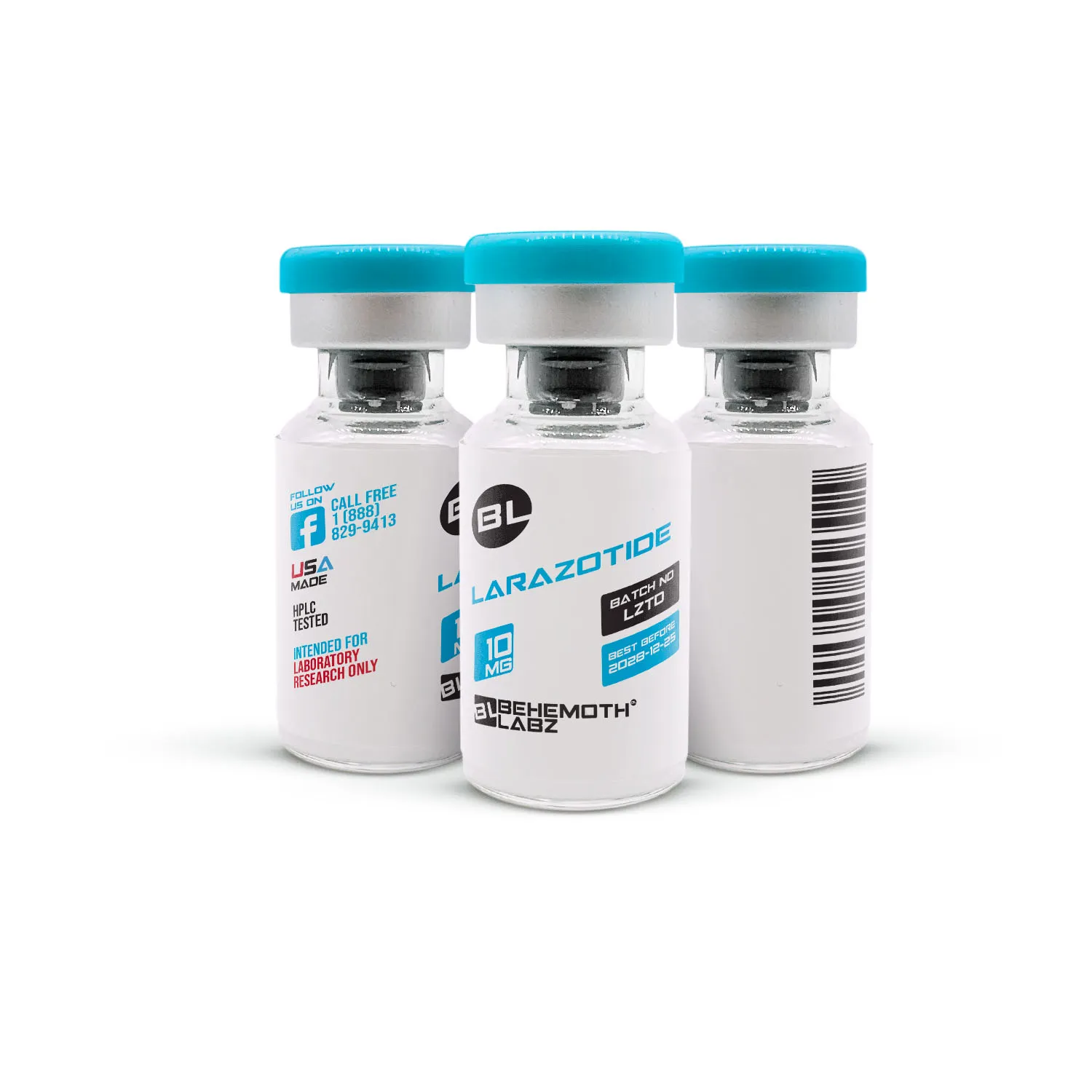
Larazotide acetate is a synthetic octapeptide. Researchers also refer to it as AT-1001. Its peptide sequence is Gly-Gly-Val-Leu-Val-Gln-Pro-Gly (GGVLVQPG). It is derived from the N-terminal sequence of the Vibrio cholerae zonula occludens toxin (ZOT) protein and acts as a competitive antagonist of the zonulin receptor at the intestinal epithelial surface in experimental settings.
So, why do researchers find larazotide acetate useful? Because it provides a defined pharmacological tool for studying intestinal tight junction dynamics, zonulin-mediated paracellular permeability, and epithelial barrier function regulation in cell-based and preclinical animal models. It has also been investigated in Phase III clinical settings as an adjunct in celiac disease research, though it carries no approved indication for any use. [Paterson et al., 2007; Kelly et al., 2013 – Cited for pharmacological context only. Documents human clinical research and does not apply to the research-grade formulation supplied here.]
ATTENTION: This product is strictly for LABORATORY AND RESEARCH PURPOSES ONLY. Not for human or veterinary use.
Mechanism of Action of Larazotide Acetate
How Does Larazotide Acetate Regulate Tight Junction Permeability?
Larazotide acetate is thought to act through two distinct but complementary mechanisms in preclinical experimental systems. First, it functions as a competitive antagonist of the zonulin receptor, thereby blocking zonulin-induced increases in paracellular permeability. Zonulin is a pre-haptoglobin 2 protein that regulates tight junction opening by signaling through a receptor-mediated cascade that ultimately disrupts the assembly of claudins, occludin, and ZO-1 proteins at the tight junction complex. Larazotide acetate competes for this receptor interaction and attenuates downstream permeability increases.
Myosin Light Chain Kinase Inhibition
A second mechanistic pathway identified in experimental models involves larazotide acetate’s inhibition of myosin light chain kinase (MLCK). MLCK-mediated phosphorylation of myosin light chain increases actin-myosin contractile tension at the apical junction, which physically forces tight junction strand separation and increases paracellular flux. Larazotide acetate inhibition of MLCK activity is thought to reduce this contractile tension, thereby facilitating tight junction closure and restoration of barrier integrity. This mechanism was identified in addition to its zonulin receptor antagonism and represents a secondary research interest in the compound’s preclinical pharmacology.
Properties of Larazotide Acetate
| Property | Detail |
| Molecular Formula | C₃₄H₅₉N₉O₁₂ (acetate salt) |
| Molecular Weight | 785.90 g/mol |
| CAS Number | 881851-50-9 |
| PubChem CID | Not independently assigned for the acetate salt form |
| IUPAC Name | Acetic acid; 2-[[(2S)-1-[(2S)-5-amino-2-[[(2S)-2-[[(2S)-2-[[(2S)-2-[[2-[(2-aminoacetyl)amino]acetyl]amino]-3-methylbutanoyl]amino]-4-methylpentanoyl]amino]-3-methylbutanoyl]amino]-5-oxopentanoyl]pyrrolidine-2-carbonyl]amino]acetic acid |
| Peptide Sequence | Gly-Gly-Val-Leu-Val-Gln-Pro-Gly (GGVLVQPG) |
| Synonyms | AT-1001, Larazotide, GGVLVQPG peptide |
| Peptide Class | Synthetic octapeptide; ZOT-derived zonulin antagonist; tight junction regulator |
| Vial Size | 10mg |
| Form | Lyophilized Powder
This page presents data for the acetate salt form of Larazotide (CAS 881851-50-9, MW ~785.9 Da). The free base form has a different CAS (258818-34-7) and MW (725.845 Da). Researchers should confirm the supplied form against the batch COA before applying molar | dosing calculations. |
| Purity | ≥99% (HPLC) |
| Shelf Life | ≥24 months lyophilized under recommended conditions |
| Storage | −20°C; protect from light and moisture |
| WADA Status | Not listed on WADA 2026 Prohibited List. Verify via GlobalDRO.com prior to sport science research use. |
Research Findings on Larazotide Acetate
Research has examined larazotide acetate extensively as a tight junction regulatory peptide in both cell-based and animal preclinical models. A review study characterizing its pharmacological action documented that larazotide acetate acts as a single-chain octapeptide tight junction regulator through zonulin receptor antagonism and redistribution of tight junction proteins including claudins and actin filaments. The compound was also linked to inhibition of myosin light chain kinase activity in experimental systems, providing a secondary mechanistic explanation for its barrier-restoring effects. Studies in rodent collagen-induced arthritis models and porcine intestinal ischemia models provided additional preclinical evidence for larazotide acetate’s tight junction regulatory activity outside the celiac disease research context. All findings are from preclinical and investigational settings [Slifer et al., 2021].
Additional preclinical investigation has examined larazotide acetate in rat models of acute liver failure induced by thioacetamide administration. In this model, oral larazotide acetate administration was associated with significantly reduced intestinal damage scores compared to untreated controls, assessed by light and electron microscopy of intestinal tissue samples. Serum ALT levels in the treated drinking water group were significantly lower than in the thioacetamide-only group. The investigators attributed these observations to larazotide acetate’s action on tight junction integrity in the intestinal epithelium, based on its established zonulin antagonism profile. These findings are from rat models only and data remains limited [Caliskan et al., 2021].
Note: Larazotide acetate is not approved by the FDA for any use. It is intended strictly for laboratory research purposes only and is not for human consumption.
Risk and Handling Information
Risk Tier: LOW TO MODERATE
Larazotide acetate has been studied in Phase III investigational clinical trials, providing a partial safety dataset from controlled human settings. However, BehemothLabz supplies it as a research compound outside any approved protocol. Its full toxicological profile for uncontrolled research use has not been formally established and researchers must treat it accordingly.
Exposure Risk
Lyophilized powder presents an inhalation hazard during weighing and reconstitution. These procedures must be performed inside a certified fume hood. N95 respiratory protection is recommended. Nitrile gloves, a lab coat, and safety eyewear are mandatory during all handling procedures. Direct skin and eye contact must be avoided at all times.
Gastrointestinal Pathway Considerations
As a zonulin antagonist and tight junction modulator, uncontrolled human exposure could produce uncharacterized effects on intestinal barrier dynamics in the absence of controlled study conditions. Any accidental exposure must be documented and managed per institutional first-aid and incident reporting protocols.
Storage Risk
Store lyophilized material at −20°C in sealed vials, protected from light and moisture. Reconstituted solution must be used within 7 days and kept at 4°C. Repeated freeze-thaw cycling must be avoided. Single-use aliquoting before initial reconstitution is strongly recommended.
Disposal
All residual material, vials, syringes, and contaminated consumables must be disposed of in full compliance with applicable institutional biosafety regulations and chemical waste management protocols.
Why Choose BehemothLabz to Buy Larazotide Acetate?
BehemothLabz supplies Larazotide Acetate (AT-1001) for laboratory and research use only. Each batch undergoes independent third-party HPLC analysis. A Certificate of Analysis is available for every production lot. BehemothLabz does not self-certify purity and external laboratories verify each lot before release.
Disclaimer
Please make sure you go through the Terms and Conditions and familiarize yourself with them, as it is important. Please research the scientific uses of this product before making any purchases. Make note that the packaging and labels of the product may differ from those shown on the website. All research involving this compound must comply with IRB guidelines for clinical investigations and IACUC directives for animal studies under the Animal Welfare Act (AWA).
Buying the product means you agree to our Terms and Conditions. You can contact our customer service team at support@behemothlabz.com if you are not fully satisfied with the product.
ATTENTION: All BehemothLabz products are strictly for LABORATORY AND RESEARCH PURPOSES ONLY. They are not to be used for any human or veterinary purposes.
Reference Links
Slifer, Z. M., Krishnan, B. R., Madan, J., & Blikslager, A. T. (2021). Larazotide acetate: A pharmacological peptide approach to tight junction regulation. American Journal of Physiology: Gastrointestinal and Liver Physiology, 320(6), G983–G989. https://pubmed.ncbi.nlm.nih.gov/33881350/
Caliskan, A. R., Gul, M., Yilmaz, I., Otlu, B., Uremis, N., Uremis, M. M., Kilicaslan, I., Gul, S., Tikici, D., Saglam, O., Yalcin, M., Demirel, U., & Harputluoglu, M. (2021). Effects of larazotide acetate, a tight junction regulator, on the liver and intestinal damage in acute liver failure in rats. Human & Experimental Toxicology, 40(12 Suppl), S693–S701. https://pubmed.ncbi.nlm.nih.gov/34791921/
| Variant | 10mg |
|---|
Related products


Injectables

Injectables
Injectables
Injectables

Injectables
Injectables

Injectables
Injectables