
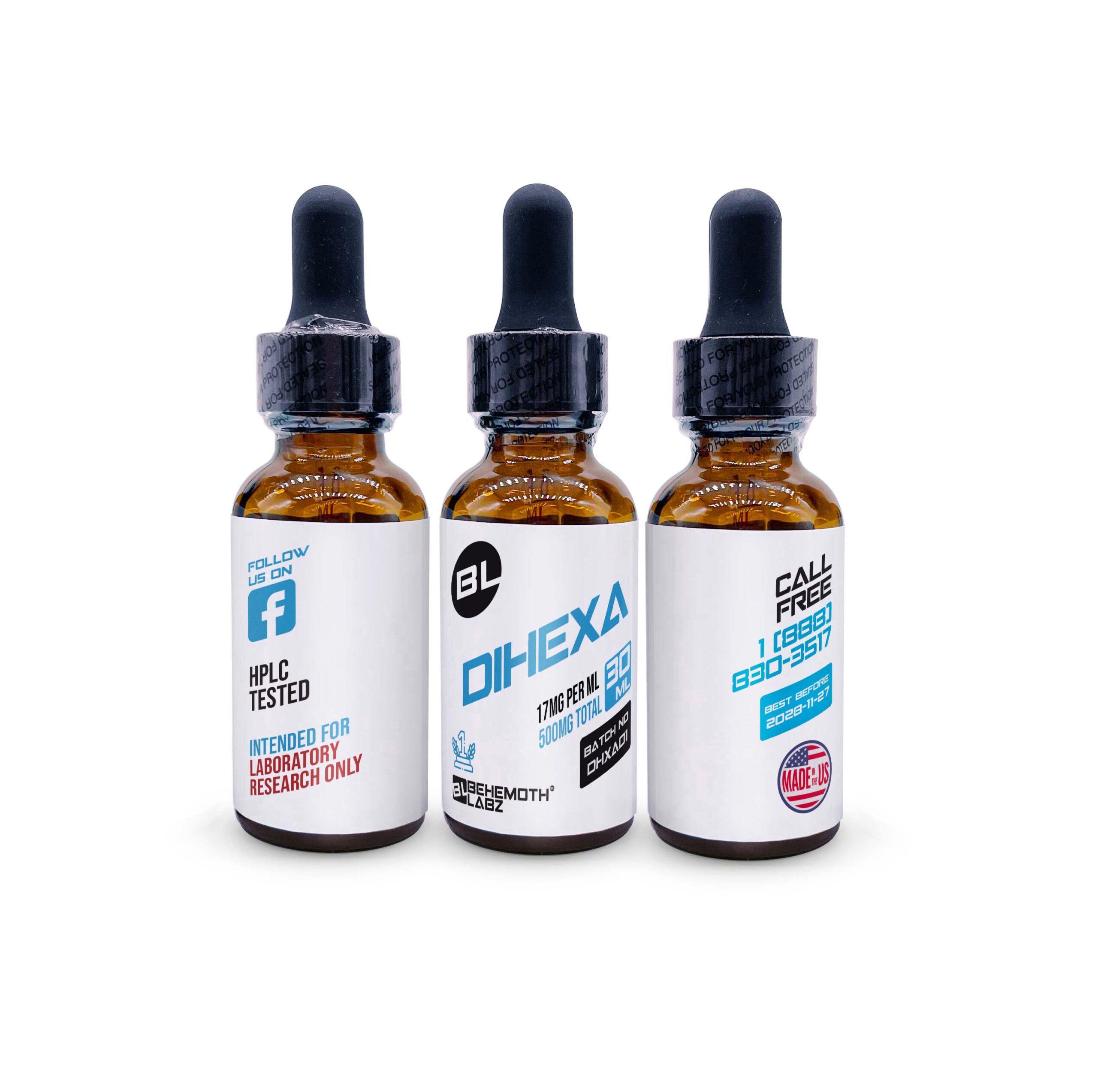
Dihexa is a synthetic oligopeptide research compound. Researchers also refer to it by its developmental code PNB-0408 or its systematic name N-hexanoic-Tyr-Ile-(6)-aminohexanoic amide. It is a structurally simplified analog of angiotensin IV — a hexapeptide fragment of the renin-angiotensin system — engineered for oral bioavailability and blood-brain barrier permeability in preclinical experimental settings. Dihexa is not a classical peptide hormone. Its peptidomimetic design confers metabolic stability and central nervous system accessibility that are atypical for peptide-based research compounds.
So, why do researchers find Dihexa useful? Because it is investigated as a small molecule modulator of hepatocyte growth factor (HGF) and its receptor c-Met in preclinical neurological research models. In experimental systems, Dihexa is studied for its interactions with synaptogenic signaling pathways, HGF-mediated neuronal survival cascades, and spatial learning-associated circuitry in rodent and zebrafish model systems. Researchers should note that the foundational 2014 mechanistic paper establishing Dihexa’s HGF/c-Met activity was formally retracted in April 2025 due to data integrity concerns involving image manipulation. The mechanistic framework for Dihexa remains under investigation, and the current evidence base is preclinical only with reduced certainty following the retraction.
ATTENTION: This product is strictly for LABORATORY AND RESEARCH PURPOSES ONLY. Not for human or veterinary use.
Mechanism of Action of Dihexa
How Does Dihexa Interact with the HGF/c-Met System?
Dihexa is proposed to act as an allosteric modulator of hepatocyte growth factor (HGF) in experimental models. HGF is a pleiotropic growth factor that activates the c-Met receptor tyrosine kinase, initiating downstream signaling cascades including PI3K/Akt and MAPK/ERK pathways involved in neuronal survival, synaptogenesis, and synaptic plasticity. In preclinical zebrafish lateral line models, Dihexa demonstrated dose-dependent protection of hair cells from aminoglycoside-induced ototoxicity, with 1 μM concentration conferring optimal protection against neomycin and gentamicin challenge. This protection was attenuated by co-treatment with an HGF antagonist (6-AH) and by inhibitors of downstream HGF targets Akt, TOR, and MEK — providing convergent experimental evidence for HGF pathway involvement in experimental settings [Uribe et al., 2015].
Researchers must note that the primary mechanistic papers establishing Dihexa as an HGF-dimerizing mimetic — Kawas et al. (2012) and Benoist et al. (2014) in the Journal of Pharmacology and Experimental Therapeutics — were formally retracted in April 2025 following a 2021 Notice of Concern related to image manipulation by a co-author. The retraction does not definitively establish that the proposed HGF/c-Met mechanism is incorrect — but it does mean that the direct molecular evidence tying Dihexa to HGF dimerization and c-Met phosphorylation can no longer be cited as established science. Research using Dihexa should treat its mechanism as proposed and under re-investigation, not confirmed.
Angiotensin IV Structural Origins and AngIV Analog Activity
Dihexa belongs to a class of compounds derived from angiotensin IV (Val-Tyr-Ile-His-Pro-Phe) and its metabolically stabilized Nle1-AngIV analog. Research on C-terminally truncated Nle1-AngIV analogs established that the core active structure required for procognitive activity could be reduced to as few as tripeptide fragments while retaining the capacity to reverse scopolamine-induced spatial memory deficits in Morris water maze paradigms and to augment dendritic spine density in hippocampal neurons [Benoist, Wright et al., 2011]. Dihexa represents the orally bioavailable, blood-brain barrier-permeable iteration of this structural optimization program.
Properties of Dihexa
| Property | Detail |
| Molecular Formula | C₂₇H₄₄N₄O₅ |
| Molecular Weight | 504.67 g/mol |
| CAS Number | 1401708-83-5 |
| PubChem CID | 129010512 |
| IUPAC Name | 6-[(2S,3S)-2-[(2S)-2-hexanamido-3-(4-hydroxyphenyl)propanamido]-3-methylpentanamido]hexanamide |
| Synonyms | PNB-0408, N-hexanoic-Tyr-Ile-(6)-aminohexanoic amide, N-(1-oxohexyl)-L-tyrosyl-N-(6-amino-6-oxohexyl)-L-isoleucinamide |
| Compound Class | Synthetic oligopeptide; angiotensin IV-derived peptidomimetic; HGF/c-Met modulator (mechanism under re-investigation) |
| Vial Size | 10mg |
| Form | Lyophilized Powder |
| Purity | ≥99% (HPLC) |
| Solubility | DMSO: 100 mg/mL; Water: Insoluble; Ethanol: Insoluble |
| Shelf Life | ≥24 months lyophilized under recommended conditions |
| Storage | −20°C; protect from light and moisture |
| WADA Status | Not listed on the WADA 2026 Prohibited List. Verify via GlobalDRO.com prior to sport science research use. |
Compound Comparison
| Feature | Dihexa | Nle1-AngIV | BPC-157 |
| Compound Origin | Angiotensin IV synthetic analog | Norleucine-substituted AngIV | Gastric pentadecapeptide |
| Structure | Linear 3-unit peptidomimetic | Hexapeptide | 15-AA linear peptide |
| Oral Bioavailability | Orally active (preclinical) | Poor | Orally active (preclinical) |
| BBB Penetrance | Yes (preclinical) | Poor | Investigated |
| Primary Research Target | HGF/c-Met pathway (under re-investigation) | AT4/AngIV receptor | Multiple: GH, VEGF, growth factor pathways |
| Evidence Status | Preclinical only; foundational papers retracted | Preclinical only | Preclinical only |
| Purity (BehemothLabz) | ≥99% HPLC | N/A | ≥99% HPLC |
Research Findings on Dihexa
Research on AngIV-derived peptides established the structural pharmacology framework within which Dihexa was developed. A preclinical study examining C-terminally truncated Nle1-AngIV analogs demonstrated that the active core structure required for procognitive activity in Morris water maze paradigms could be reduced to tri- and tetrapeptide fragments, and that a correlation existed between a peptide’s procognitive activity and its capacity to increase dendritic spine density and spine head size in hippocampal neurons. These findings informed the development of Dihexa as a metabolically stable, orally active peptidomimetic retaining the core structural elements associated with synaptogenic activity in preclinical rodent models [Benoist, Wright et al., 2011].
Additional preclinical investigation examined Dihexa in a zebrafish lateral line model of chemical ototoxicity. Treatment with 1 μM Dihexa conferred dose-dependent protection of lateral line hair cells against neomycin and gentamicin challenge. Protection was attenuated by HGF antagonist co-treatment and by downstream signaling inhibitors (Akt, TOR, MEK), while fluorescent aminoglycoside uptake data indicated the protection was mediated by intracellular events rather than by blocking aminoglycoside entry. These findings provide non-retracted experimental evidence for HGF-mediated cellular protection in a zebrafish model system. All findings are from zebrafish and rodent preclinical settings. No human clinical data exists for Dihexa [Uribe et al., 2015].
Note: Dihexa is not approved by the FDA for any use. Two foundational papers on its mechanism of action were formally retracted in April 2025. The mechanistic evidence base should be treated as reduced certainty pending re-investigation. It is intended strictly for laboratory research purposes only and is not for human consumption.
Risk and Handling Information
Risk Tier: MODERATE — Orally Active Peptidomimetic, Uncharacterized Human Safety Profile
Dihexa is an orally active, blood-brain barrier-permeable compound with no established human toxicological profile. Its peptidomimetic design and CNS penetrance mean that uncontrolled exposure carries uncharacterized risks of central neurological pathway engagement that have not been formally assessed in human subjects. No published human safety data exists for Dihexa.
Exposure Risk
Lyophilized powder presents an inhalation hazard. All weighing, reconstitution, and handling must be performed inside a certified fume hood or biosafety cabinet. N95 respiratory protection is required during any powder manipulation. Nitrile gloves, a lab coat, and safety eyewear are mandatory during all handling procedures. Direct skin and eye contact must be avoided at all times.
CNS Penetrance Risk
Dihexa is documented as blood-brain barrier-permeable in preclinical model systems. This property means that any uncontrolled dermal or inhalation exposure carries an uncharacterized risk of CNS pathway engagement. Any accidental exposure must be treated as a potential pharmacological event and managed per institutional first-aid and incident reporting protocols.
HGF Pathway Considerations
Dihexa is investigated as an HGF/c-Met pathway modulator. HGF and c-Met are implicated in cell proliferation, migration, and survival signaling across multiple tissue types. Uncontrolled activation of HGF/c-Met signaling in non-experimental contexts represents an uncharacterized biological risk. Research protocols involving Dihexa must be conducted under appropriate institutional oversight.
Storage Risk
Store lyophilized material at −20°C in sealed vials, protected from light and moisture. Dihexa is insoluble in water and ethanol — reconstitute in DMSO only per experimental protocol. The reconstituted solution must be used within 7 days. Repeated freeze-thaw cycling must be avoided. Single-use aliquoting before initial reconstitution is strongly recommended.
Disposal
All residual material, vials, syringes, and contaminated consumables must be disposed of in full compliance with applicable institutional biosafety regulations and chemical waste management protocols.
Frequently Asked Questions
Q: What is Dihexa?
A: Dihexa (PNB-0408) is a synthetic oligopeptide and angiotensin IV-derived peptidomimetic investigated in preclinical models as a modulator of hepatocyte growth factor (HGF) and its receptor c-Met. It is orally active and blood-brain barrier-permeable in preclinical settings. It is not approved by the FDA for any use. Researchers should note that the foundational mechanistic papers on Dihexa were formally retracted in April 2025, and the compound’s mechanism should be treated as under re-investigation. Sold exclusively for laboratory research.
Q: How does Dihexa relate to angiotensin IV?
A: Dihexa is derived from the structural optimization of angiotensin IV (Val-Tyr-Ile-His-Pro-Phe) and its Nle1-AngIV analog. Preclinical research on C-terminally truncated AngIV analogs identified the minimum active structural fragment required for procognitive activity in rodent models and for spinogenesis in hippocampal neurons. Dihexa represents the peptidomimetic iteration of this structural core, engineered for oral bioavailability and metabolic stability.
Q: What is the current status of the retracted Dihexa papers?
A: Two foundational papers — Kawas et al. (2012) and Benoist et al. (2014) in the Journal of Pharmacology and Experimental Therapeutics — that proposed the HGF-dimerization mechanism for Dihexa-class compounds were formally retracted in April 2025 following a 2021 Notice of Concern related to image manipulation. The retractions do not confirm that Dihexa is inactive, but they significantly reduce the available mechanistic evidence. The 2015 Uribe et al. zebrafish study (not retracted) provides independent preclinical evidence for HGF-mediated cellular protection by Dihexa.
Q: What is the molecular weight and CAS number of Dihexa?
A: Dihexa has a molecular weight of 504.67 g/mol and a molecular formula of C₂₇H₄₄N₄O₅. CAS number is 1401708-83-5. PubChem CID is 129010512.
Q: What purity does BehemothLabz supply for Dihexa?
A: BehemothLabz supplies Dihexa at ≥99% purity confirmed by independent third-party HPLC analysis. A Certificate of Analysis is available for every production lot. BehemothLabz does not self-certify. Contact support@behemothlabz.com to request documentation.
Q: How should Dihexa be stored and reconstituted?
A: Store lyophilized Dihexa at −20°C, protected from light and moisture. Dihexa is soluble in DMSO at up to 100 mg/mL. It is insoluble in water and ethanol. Reconstitute in DMSO only. Avoid repeated freeze-thaw cycling. Single-use aliquoting before initial reconstitution is recommended.
Q: Is Dihexa approved by the FDA?
A: No. Dihexa has no FDA-approved indication for any use. No human clinical trials have been completed for Dihexa. BehemothLabz supplies it exclusively as a research-grade compound for controlled laboratory research purposes only. It is not for human or veterinary administration.
Why Choose BehemothLabz to Buy Dihexa?
BehemothLabz supplies Dihexa (PNB-0408) for laboratory and research use only. Each batch undergoes independent third-party HPLC analysis, confirming purity at ≥99%. A Certificate of Analysis is available for every production lot and is not a generic representative document. BehemothLabz does not self-certify purity, and external laboratories verify each lot before release. Researchers requiring documentation can contact support@behemothlabz.com at any time.
Disclaimer
Please make sure you go through the Terms and Conditions and familiarize yourself with them, as it is important. Please research the scientific uses of this product before making any purchases. Make note that the packaging and labels of the product may differ from those shown on the website. All research involving this compound must comply with IRB guidelines for clinical investigations and IACUC directives for animal studies under the Animal Welfare Act (AWA).
Buying the product means you agree to our Terms and Conditions. You can contact our customer service team at support@behemothlabz.com if you are not fully satisfied with the product.
ATTENTION: All BehemothLabz products are strictly for LABORATORY AND RESEARCH PURPOSES ONLY. They are not to be used for any human or veterinary purposes.
Reference Links
Benoist, C. C., Wright, J. W., Zhu, M., Appleyard, S. M., Wayman, G. A., & Harding, J. W. (2011). Facilitation of hippocampal synaptogenesis and spatial memory by C-terminal truncated Nle1-angiotensin IV analogs. Journal of Pharmacology and Experimental Therapeutics, 339(1), 35–44. https://pubmed.ncbi.nlm.nih.gov/21719467/ [DOI: https://doi.org/10.1124/jpet.111.182220]
Uribe, P. M., Kawas, L. H., Harding, J. W., & Coffin, A. B. (2015). Hepatocyte growth factor mimetic protects lateral line hair cells from aminoglycoside exposure. Frontiers in Cellular Neuroscience, 9, 3. https://pubmed.ncbi.nlm.nih.gov/25674052/ [DOI: https://doi.org/10.3389/fncel.2015.00003]