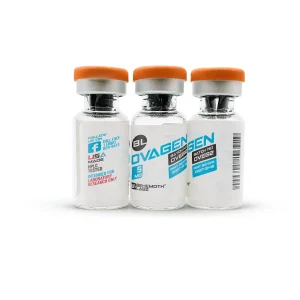

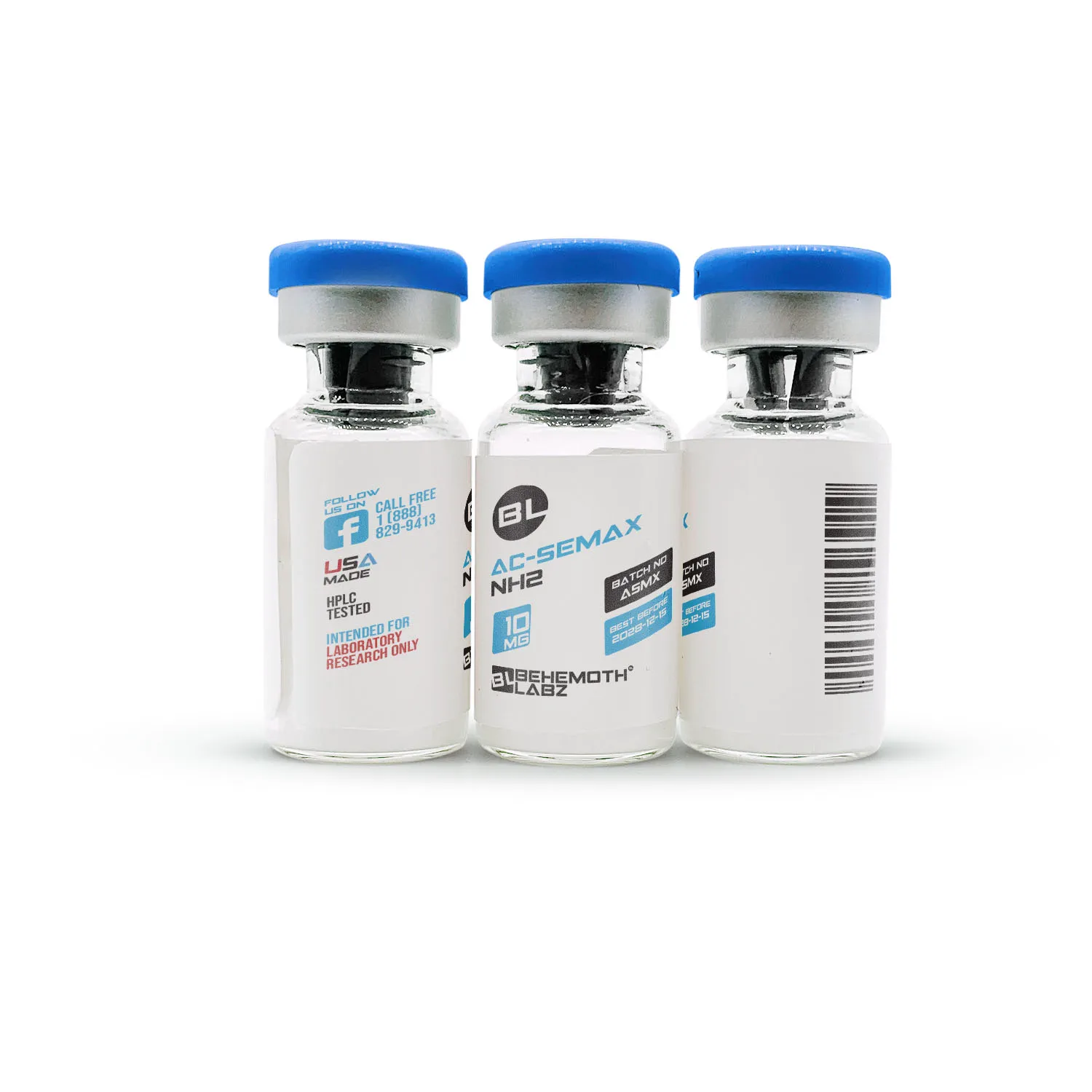
Buy AC-Semax NH2 (10mg) Online | BehemothLabz
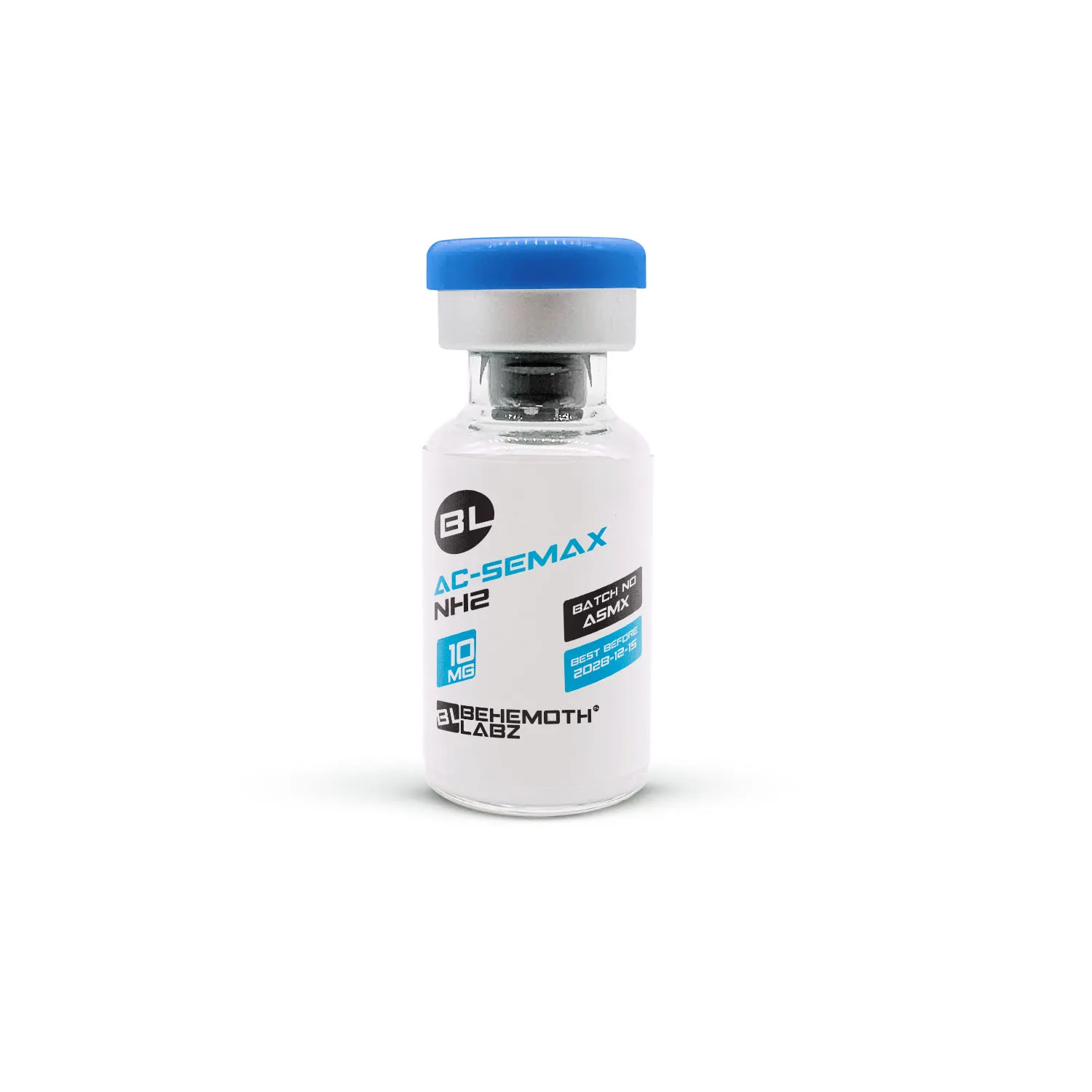
AC-Semax NH2 is a synthetic heptapeptide. Researchers also call it Acetyl Semax Amide or Ac-Semax-NH2. It is a structurally modified variant of Semax, itself a synthetic analog of the ACTH(4-10) fragment. The parent peptide sequence is Met-Glu-His-Phe-Pro-Gly-Pro. In AC-Semax NH2, two terminal modifications are introduced. An acetyl group is added at the N-terminus, and the C-terminal carboxylic acid is replaced with an amide group. Together, these changes are studied for their effects on enzymatic stability and resistance to peptide degradation in experimental settings.
So, why do researchers find AC-Semax NH2 useful? Both terminal modifications are thought to extend the in vitro half-life of the peptide by reducing susceptibility to aminopeptidase and carboxypeptidase activity. This makes AC-Semax NH2 a structurally stabilized probe for studying ACTH analog interactions with neuroendocrine signaling pathways in laboratory models.
ATTENTION: This product is strictly for LABORATORY AND RESEARCH PURPOSES ONLY. Not for human or veterinary use.
Mechanism of Action of AC-Semax NH2
How Does AC-Semax NH2 Interact with Neurochemical Pathways?
AC-Semax NH2 is thought to interact with the same neurochemical pathways as its parent compound Semax in preclinical models. Semax and its analogs are believed to influence brain-derived neurotrophic factor (BDNF) expression and to modulate monoaminergic systems in experimental settings. In rodent models, Semax administration has been observed to normalize dopamine, norepinephrine, and serotonin levels in key brain structures following pharmacological perturbation. The acetylated and amidated structural modifications are investigated to determine whether they preserve or alter these pathway interactions relative to the parent compound.
Neuroprotective Interactions and Metal Ion Coordination
Semax and its analogs have been investigated for copper(II) chelation properties in vitro. Structural studies have identified that Semax forms coordination complexes with copper in a 4N planar arrangement, with the predominant species [CuLH-2]²⁻ forming above pH 5. In neuronal and endothelial cell line studies, the presence of these Semax-copper complexes was associated with reduced copper-induced cytotoxicity compared to copper ions alone. AC-Semax NH2 is investigated within this framework as a structurally stabilized probe for similar metal coordination studies.
Properties of AC-Semax NH2
| Property | Detail |
| Molecular Formula | C₃₉H₅₄N₁₀O₁₀S |
| Molecular Weight | 854.97 g/mol |
| CAS Number | 2920938-90-3
Note: Parent compound Semax CAS is | 80714-61-0. CAS 2920938-90-3 is | specific to the N-acetylated, C-terminally | amidated form (AC-Semax NH2), confirmed | via MedChemExpress and PubChem CID 172638603. |
| PubChem CID | 172638603 |
| IUPAC Name | N-acetyl-L-methionyl-L-alpha-glutamyl-L-histidyl-L-phenylalanyl-L-prolylglycyl-L-prolinamide |
| Synonyms | Acetyl Semax Amide, Ac-Semax-NH2, Ac-MEHFPGP-NH2, N-Acetyl Semax Amidate |
| Peptide Class | Acetylated, C-terminally amidated heptapeptide; ACTH(4-10) analog |
| Vial Size | 10mg |
| Form | Lyophilized Powder |
| Purity | ≥99% (HPLC) |
| Shelf Life | ≥24 months lyophilized under recommended conditions |
| Storage | −20°C; protect from light and moisture |
| WADA Status | Not listed on the WADA 2026 Prohibited List. Verify via GlobalDRO.com prior to sport science research use. |
Research Findings on AC-Semax NH2
Research has examined the role of Semax in modulating monoaminergic systems in rodent developmental models. In a study using neonatal rat models exposed to the SSRI fluvoxamine, Semax administration was observed to normalize disrupted levels of brain biogenic amines and to attenuate anxiety-like behavior and impaired learning performance in maze tasks. These effects were associated with interactions across dopaminergic, noradrenergic, and serotonergic systems in multiple brain structures. AC-Semax NH2, as a structurally stabilized analog, is investigated for analogous interactions within this experimental framework. These findings are from rodent models only, and data remain limited [Glazova et al., 2021].
Further investigation has examined Semax analogs for copper(II) binding capacity and cytoprotective properties in neuronal cell models. A study characterizing the coordination chemistry of Semax with copper identified a 4N planar coordination geometry in the predominant complex species. In cell viability assays using SH-SY5Y neuroblastoma and RBE4 endothelial cell lines, Semax-copper complexes demonstrated reduced cytotoxicity relative to free copper ion alone. AC-Semax NH2 is studied within this metal coordination research framework, given its structural proximity to the parent compound. Findings are not consistent across all model systems [Tabbì et al., 2014].
Note: AC-Semax NH2 is not approved by the FDA for any use. It is intended strictly for laboratory research purposes only and is not for human consumption.
Risk and Handling Information
Risk Tier: MODERATE
AC-Semax NH2 is a neuropeptide analog with no established human toxicological profile. The dual terminal modifications alter the pharmacological characteristics of the parent compound Semax in ways that have not been formally characterized in human subjects. All handling must be conducted under appropriate laboratory safety conditions.
Exposure Risk
Lyophilized powder presents an inhalation hazard. All weighing, reconstitution, and handling must be performed inside a certified fume hood or biosafety cabinet. N95 respiratory protection is required during any powder manipulation. Nitrile gloves, a lab coat, and safety eyewear are mandatory during all handling procedures. Direct skin and eye contact must be avoided at all times.
CNS Activity Uncertainty
As a peptide thought to interact with monoaminergic and BDNF-related signaling pathways in preclinical models, uncontrolled human exposure to AC-Semax NH2 carries an uncharacterized risk of CNS pathway dysregulation. Any accidental exposure must be treated as a potential toxicological event and managed per institutional first-aid and incident reporting protocols.
Storage Risk
Store lyophilized material at −20°C in sealed vials, protected from light and moisture. Reconstituted solution must be used within 7 days and kept at 4°C. Repeated freeze-thaw cycling must be avoided. Single-use aliquoting before initial reconstitution is strongly recommended.
Disposal
All residual material, vials, syringes, and contaminated consumables must be disposed of in full compliance with applicable institutional biosafety regulations and chemical waste management protocols.
Why Choose BehemothLabz to Buy AC-Semax NH2?
BehemothLabz supplies AC-Semax NH2 for laboratory and research use only. Each batch undergoes independent third-party HPLC analysis. A Certificate of Analysis is available for every production lot. BehemothLabz does not self-certify purity, and external laboratories verify each lot before release.
Disclaimer
Please make sure you go through the Terms and Conditions and familiarize yourself with them, as it is important. Please research the scientific uses of this product before making any purchases. Make note that the packaging and labels of the product may differ from those shown on the website. All research involving this compound must comply with IRB guidelines for clinical investigations and IACUC directives for animal studies under the Animal Welfare Act (AWA).
Buying the product means you agree to our Terms and Conditions. You can contact our customer service team at support@behemothlabz.com if you are not fully satisfied with the product.
ATTENTION: All BehemothLabz products are strictly for LABORATORY AND RESEARCH PURPOSES ONLY. They are not to be used for any human or veterinary purposes.
Reference Links
Glazova, N. Y., Manchenko, D. M., Volodina, M. A., Merchieva, S. A., Andreeva, L. A., Kudrin, V. S., Myasoedov, N. F., & Levitskaya, N. G. (2021). Semax, a synthetic ACTH(4-10) analogue, attenuates behavioural and neurochemical alterations following early-life fluvoxamine exposure in white rats. Neuropeptides, 86, 102114. https://pubmed.ncbi.nlm.nih.gov/33418449/
Tabbì, G., Magrì, A., Giuffrida, A., Lanza, V., Pappalardo, G., Naletova, I., Nicoletti, V. G., & Attanasio, F. (2014). Semax, an ACTH4-10 peptide analog with high affinity for copper(II) ion and protective ability against metal-induced cell toxicity. Journal of Inorganic Biochemistry, 142, 39–46. https://pubmed.ncbi.nlm.nih.gov/25310602/