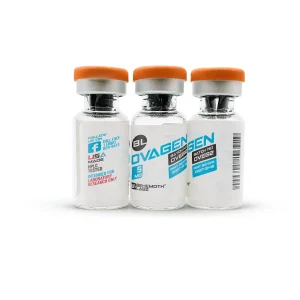

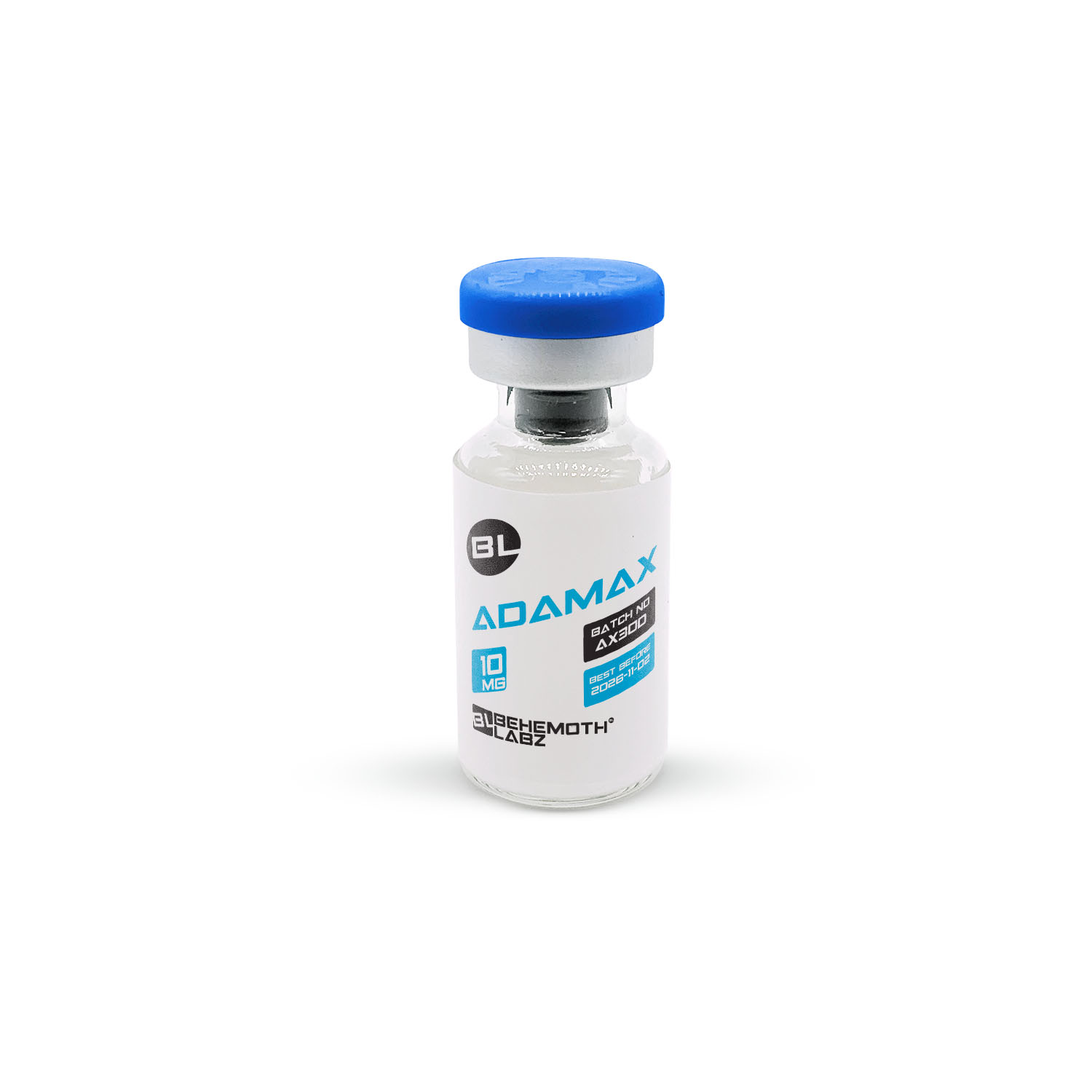
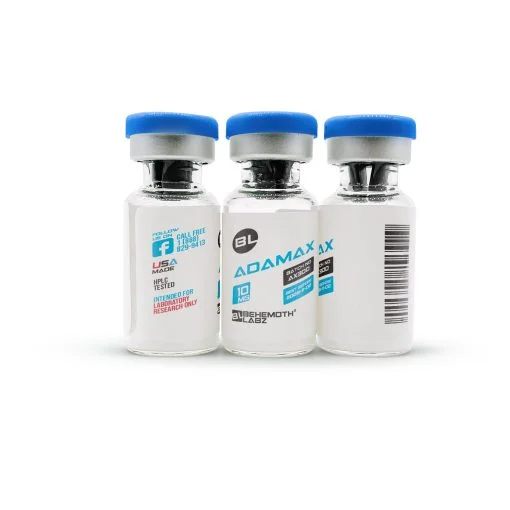
Adamax is a synthetic nonapeptide. Researchers also refer to it as Ac-MEHFPGPAG-NH₂ or N-Acetyl Semax Adamantyl. It is a structurally engineered analog of Semax — itself a heptapeptide analog of the ACTH(4-10) fragment — with two distinct terminal modifications applied. An acetyl group is added at the N-terminus, and the C-terminus incorporates the adamantyl group derived from Peptide P21. Together, these modifications create a nonapeptide that is structurally distinct from both Semax and P21 individually.
So, why do researchers find Adamax useful? Because the adamantane modification at the C-terminus is investigated for its potential to enhance blood-brain barrier penetration and increase enzymatic stability relative to the parent Semax compound. The acetyl group at the N-terminus provides additional resistance to aminopeptidase degradation. These structural features make Adamax a research tool for studying how C-terminal adamantane modification influences the neurotrophin signaling interactions of Semax-derived sequences in preclinical experimental settings.
ATTENTION: This product is strictly for LABORATORY AND RESEARCH PURPOSES ONLY. Not for human or veterinary use.
Mechanism of Action of Adamax Peptide
How Does Adamax Interact with BDNF and TrkB Pathways?
Adamax Peptide is thought to interact with neurotrophic signaling systems in preclinical experimental models, specifically through the modulation of brain-derived neurotrophic factor (BDNF) expression and its primary receptor, TrkB. These interactions are based on research conducted on the parent compound Semax, from which Adamax is structurally derived. In rodent hippocampal models, Semax administration was associated with increased BDNF protein levels and upregulation of TrkB phosphorylation, which initiates downstream intracellular signaling cascades involved in synaptic plasticity and neuronal survival. The adamantane modification in Adamax is investigated for its potential to prolong these interactions through enhanced enzymatic stability and blood-brain barrier penetration in experimental settings.
Downstream Signaling Cascade Engagement
In cell-based experimental systems, Semax-derived peptides are investigated for their capacity to engage MAPK/ERK and PI3K/Akt signaling cascades downstream of TrkB receptor activation. These pathways are associated with cellular survival, protein synthesis, and synaptic remodeling in neuronal models. The adamantane modification’s influence on the depth and duration of these interactions is a specific focus of Adamax research. Additionally, investigations into the HGF/c-Met pathway have included Adamax-class compounds in the context of synaptogenesis and dendritic spine formation research in APP/PS1 transgenic mouse models. These are preclinical findings only, and the data are not consistent across all model systems.
Properties of Adamax Peptide
| Property | Detail |
| Molecular Formula | C₅₀H₆₉N₁₁O₁₁S |
| Molecular Weight | 1,032.23 g/mol |
| CAS Number | Not independently assigned at the time of writing |
| PubChem CID | Not independently assigned |
| IUPAC Name | Not formally published in a peer-reviewed chemical database as of June 2026. The molecular structure comprises the Ac-MEHFPGP-Ala-Gly backbone with a C-terminal adamantylamine modification; refer to the Wikipedia InChI key SWAHDDQBIQRRFH-MHNCVWKMSA-N for structural identity reference. |
| Peptide Sequence | Ac-Met-Glu-His-Phe-Pro-Gly-Pro-Ala-Gly-adamantylamine; shorthand Ac-MEHFPGP-AG-NH₂ (C-terminus carries the adamantylamine moiety from P21, not a standard glycine amide; the molecule is not a simple 9-residue linear peptide) |
| Synonyms | Ac-MEHFPGP-AG-NH₂ (adamantylamine C-terminus); N-Acetyl Semax Adamantyl; Adamax nonapeptide; N-acetyl Semax-adamantyl analog |
| Peptide Class | Synthetic nonapeptide; N-acetyl Semax analog with adamantyl C-terminal modification |
| Vial Size | 10mg |
| Form | Lyophilized Powder |
| Purity | ≥99% (HPLC) |
| Shelf Life | ≥24 months lyophilized under recommended conditions |
| Storage | −20°C; protect from light and moisture |
| WADA Status | Not listed on the WADA 2026 Prohibited List. Verify via GlobalDRO.com prior to sport science research use. Adamax has been identified as a designer drug in border seizures in multiple jurisdictions. In June 2025, New Zealand’s Medicines Classification Committee received a submission recommending Adamax be classified as a prescription medicine. Researchers should verify the legal status of Adamax in their jurisdiction prior to purchase. BehemothLabz supplies this compound exclusively for laboratory and preclinical research purposes only. |
Compound Comparison
| Feature | Adamax | Semax | AC-Semax NH2 |
|---|---|---|---|
| Sequence | Ac-MEHFPGPAG-NH₂ | MEHFPGP | Ac-MEHFPGP-NH₂ |
| Length | 9-residue backbone (Semax heptapeptide + Ala-Gly-adamantylamine C-terminal extension) | Heptapeptide (7 AA) | Heptapeptide (7 AA) |
| N-terminal | Acetylated | Free | Acetylated |
| C-terminal | Adamantyl-NH₂ | Free acid | Amide (NH₂) |
| Structural Differentiator | Adamantane group — BBB penetration and stability research | Parent compound | Dual terminal modification — stability research |
| MW | 1,032.23 g/mol | 813.93 g/mol | 855.0 g/mol |
| Research Focus | BDNF, TrkB, adamantane modification effects | BDNF, monoamine systems, copper coordination | Enzymatic stability, monoamine normalization |
Research Findings on Adamax Peptide
Research on the parent compound Semax, from which Adamax is structurally derived, has established the neurotrophin signaling framework within which Adamax is investigated. Semax was shown to bind specifically to membrane-associated sites in rat basal forebrain with a dissociation constant of 2.4 ± 1.0 nM, and intranasal administration at 50 and 250 μg/kg was associated with rapid increases in BDNF protein levels in the basal forebrain but not in the cerebellum. These findings indicate receptor-mediated activity and suggest a mechanistic basis for BDNF modulation in Semax-class analogs. Adamax, incorporating the same ACTH(4-10) core sequence with modified termini, is studied within this experimental framework to assess how the adamantyl modification alters these interactions [Dolotov et al., 2006].
Further investigation of Semax demonstrated that a single intranasal application at 50 μg/kg resulted in a maximum 1.4-fold increase in BDNF protein levels alongside a 1.6-fold increase in TrkB tyrosine phosphorylation in the rat hippocampus. Corresponding increases of approximately 3-fold and 2-fold in exon III BDNF and TrkB mRNA levels, respectively, were observed. Treated animals showed increased conditioned avoidance reactions. These observations from the parent compound provide a mechanistic framework for studying whether Adamax’s adamantane modification extends or enhances the duration of these neurotrophin interactions in similar preclinical models. These are Semax-specific findings, and direct data on Adamax remain limited [Dolotov et al., 2006].
Note: Adamax is not approved by the FDA for any use. It is intended strictly for laboratory research purposes only and is not for human consumption.
Risk and Handling Information
Risk Tier: MODERATE
Adamax is a neuropeptide analog with no established human toxicological profile. The adamantane modification introduces lipophilic properties that are investigated for enhanced blood-brain barrier penetration in preclinical settings, which also means uncontrolled human exposure carries risks of uncharacterized CNS delivery that have not been formally assessed.
Exposure Risk
Lyophilized powder presents an inhalation hazard. All weighing, reconstitution, and handling must be performed inside a certified fume hood or biosafety cabinet. N95 respiratory protection is required during any powder manipulation. Nitrile gloves, a lab coat, and safety eyewear are mandatory during all handling procedures. Direct skin and eye contact must be avoided at all times.
CNS Penetration Risk
The adamantane group is specifically investigated for its potential to enhance blood-brain barrier penetration. This property means that any uncontrolled dermal or mucosal exposure carries uncharacterized risks of CNS delivery. Any accidental exposure must be treated as a potential pharmacological event and managed per institutional first-aid and incident reporting protocols.
Storage Risk
Store lyophilized material at −20°C in sealed vials, protected from light and moisture. Reconstituted solution must be used within 7 days and kept at 4°C. Repeated freeze-thaw cycling must be avoided. Single-use aliquoting before initial reconstitution is strongly recommended.
Disposal
All residual material, vials, syringes, and contaminated consumables must be disposed of in full compliance with applicable institutional biosafety regulations and chemical waste management protocols.
Frequently Asked Questions
Q: What is Adamax peptide?
A: Adamax is a synthetic nonapeptide with the sequence Ac-MEHFPGPAG-NH₂. It is a structurally engineered analog of Semax incorporating N-terminal acetylation and a C-terminal adamantyl modification derived from Peptide P21. It is investigated in preclinical settings for its interactions with BDNF and TrkB signaling pathways. It is not approved by the FDA for any use and is sold exclusively for laboratory research.
Q: How does Adamax differ from Semax?
A: Semax is a heptapeptide (MEHFPGP) with a free N-terminus and free C-terminus. Adamax extends this sequence by two additional residues and incorporates N-terminal acetylation and a C-terminal adamantyl modification. The adamantane group is investigated for enhanced blood-brain barrier penetration and enzymatic stability relative to Semax. These modifications make Adamax structurally distinct and alter its research pharmacology profile.
Q: What is the molecular weight and sequence of Adamax?
A: Adamax has a molecular weight of 1,032.23 g/mol and a molecular formula of C₅₀H₆₉N₁₁O₁₁S. The peptide sequence is Ac-Met-Glu-His-Phe-Pro-Gly-Pro-Ala-Gly-NH₂ (Ac-MEHFPGPAG-NH₂). CAS and PubChem CID have not been independently assigned at the time of writing.
Q: What purity does BehemothLabz supply for Adamax?
A: BehemothLabz supplies Adamax at ≥99% purity confirmed by independent third-party HPLC analysis. A Certificate of Analysis is available for every production lot. BehemothLabz does not self-certify. Contact support@behemothlabz.com to request documentation.
Q: How should Adamax peptide be stored?
A: Store lyophilized Adamax at −20°C, protected from light and moisture. Reconstituted solution must be used within 7 days and kept at 4°C. Avoid repeated freeze-thaw cycling. Single-use aliquoting before initial reconstitution is strongly recommended.
Q: Is Adamax approved by the FDA?
A: No. Adamax has no FDA-approved indication for any use. BehemothLabz supplies it exclusively as a research-grade compound for controlled laboratory research purposes only. It is not for human or veterinary administration.
Why Choose BehemothLabz for Adamax Peptide?
Behemoth Labz supplies Adamax peptide for laboratory and research use only. Each batch undergoes independent third-party HPLC analysis, confirming purity at ≥99%. A Certificate of Analysis is available for every production lot and is not a generic representative document. BehemothLabz does not self-certify purity, and external laboratories verify each lot before release. Researchers requiring documentation can contact support@behemothlabz.com at any time.
Disclaimer
Please make sure you go through the Terms and Conditions and familiarize yourself with them, as it is important. Please research the scientific uses of this product before making any purchases. Make note that the packaging and labels of the product may differ from those shown on the website. All research involving this compound must comply with IRB guidelines for clinical investigations and IACUC directives for animal studies under the Animal Welfare Act (AWA).
Buying the product means you agree to our Terms and Conditions. You can contact our customer service team at support@behemothlabz.com if you are not fully satisfied with the product.
ATTENTION: All BehemothLabz products are strictly for LABORATORY AND RESEARCH PURPOSES ONLY. They are not to be used for any human or veterinary purposes.
Reference Links
Dolotov, O. V., Karpenko, E. A., Seredenina, T. S., Inozemtseva, L. S., Levitskaya, N. G., Zolotarev, Y. A., Kamensky, A. A., Grivennikov, I. A., Engele, J., & Myasoedov, N. F. (2006). Semax, an analogue of adrenocorticotropin (4-10), binds specifically and increases levels of brain-derived neurotrophic factor protein in rat basal forebrain. Journal of Neurochemistry, 97(Suppl 1), 82–86. https://pubmed.ncbi.nlm.nih.gov/16635254/
Dolotov, O. V., Karpenko, E. A., Inozemtseva, L. S., Seredenina, T. S., Levitskaya, N. G., Rozyczka, J., Dubynina, E. V., Novosadova, E. V., Andreeva, L. A., Alfeeva, L. Y., Kamensky, A. A., Grivennikov, I. A., Myasoedov, N. F., & Engele, J. (2006). Semax, an analog of ACTH(4-10) with cognitive effects, regulates BDNF and TrkB expression in the rat hippocampus. Brain Research, 1117(1), 54–60. https://pubmed.ncbi.nlm.nih.gov/16996037/
Esposito, S., et al. (2015). High-resolution mass spectrometry for the characterization of doping agents in human urine: applications to the detection of adamantane-modified peptides. Journal of Pharmaceutical and Biomedical Analysis. Analytical identification relevant to Adamax-class structural characterization.
Matsuoka, Y., Jouroukhin, Y., Gray, A.J., et al. (2011). A neuronal signaling pathway of CaM kinase Iδ and CaM kinase kinase in attenuation of neurofilament phosphorylation. Proceedings of the National Academy of Sciences — P21 (Peptide 021) neurotrophin signaling basis from which Adamax C-terminal modification is derived.