
What Is Cardarine (GW-501516)?
Cardarine — also identified as GW-501516 is an investigational small-molecule compound classified as a PPARδ (Peroxisome Proliferator-Activated Receptor delta) agonist. It is among the most studied non-steroidal research compounds in preclinical metabolic and oxidative pathway research.
In preclinical evaluations, Cardarine GW-501516 has been observed to bind and activate PPARδ nuclear receptors in laboratory models. Researchers associate this activation with potential changes in β-oxidation of fatty acids, intracellular signaling activity, and homeostatic metabolic modulation — all strictly within experimental research settings.
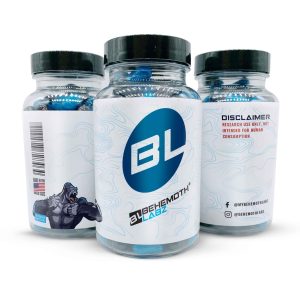
BehemothLabz supplies Cardarine capsules for sale exclusively for laboratory and investigational research purposes.
Physicochemical Profile of Cardarine by Behemoth Labz
| Specification | Detail |
| Compound Name | Cardarine GW-501516 |
| Synonyms / Also Known As | Endurobol, GW1516, GW 50156, GW-50156, 501516 |
| CAS Number | 317318-70-0 |
| Molecular Formula | C21H18F3NO3S2 |
| Molecular Weight | 453.50 g/mol |
| Receptor Target | PPARδ (Peroxisome Proliferator-Activated Receptor Delta) — Full Agonist |
| Receptor Selectivity | ~1,000-fold selectivity for PPARδ over PPARα and PPARγ |
| Capsule Strength | 20mg per capsule |
| Purity | ≥99% (independently third-party verified per lot) |
| Certificate of Analysis (COA) | Per-lot — available on product page or via support request |
| Analytical Method | HPLC / LC-MS identity and purity confirmation |
| Solubility | DMSO, ethanol (for laboratory reconstitution only) |
| Storage — Capsule Form | 15–25°C, dry, away from direct light and humidity |
| Long-Term Storage | Refrigerate at 4°C; avoid repeated temperature cycling |
| Origin | USA — manufactured and analytically tested domestically |
| Regulatory Status | Not FDA-approved. Not approved for human or veterinary use. |
| Intended Use | Laboratory and preclinical research only |
Mechanism of Action: How Does Cardarine GW-501516 Work?
How Does GW-501516 Interact with the PPARδ Receptor?
At the molecular level, GW-501516 is a high-affinity, highly selective ligand for the PPARδ isoform (approximately 1,000-fold selectivity over PPARα and PPARγ in binding assays). The compound docks at the hydrophobic ligand-binding domain (LBD) located in the C-terminal region of the PPARδ receptor protein. Upon binding, GW-501516 induces a conformational rearrangement in helix 12 of the receptor — the activation function helix (AF-2 helix) — which stabilises the co-activator binding surface on the receptor.
This conformational shift facilitates recruitment of transcriptional co-activators, notably PGC-1α (peroxisome proliferator-activated receptor gamma coactivator 1-alpha). The resulting PPARδ/co-activator complex translocates to the nucleus and binds PPAR response elements (PPREs) in the promoter regions of target genes associated with fatty acid catabolism and mitochondrial biogenesis. All mechanistic observations described here derive from in vitro binding assays and preclinical animal models. No human mechanistic data exists for GW-501516.
A foundational characterisation of PPARδ agonist pharmacology is available in: Wang et al., Cell, 2004 [PubMed PMID: 15242645]. This preclinical study investigated PPARδ activation in murine skeletal muscle models and is widely cited in GW-501516 research literature.
Within PPARδ pharmacology research, GW-501516 is classified as a potent, selective, non-covalent full agonist. Its high selectivity profile makes it a preferred tool compound for experimental designs aiming to isolate PPARδ-specific effects from the broader PPAR superfamily, a key consideration in metabolic pathway research.
Cardarine Relationship to GW0742
In preclinical research, Cardarine GW-501516 and GW0742 are studied as structurally related PPARδ agonists. Researchers use both compounds in comparative receptor activation and selectivity studies to distinguish PPARδ-specific effects from broader PPAR pathway involvement.
Why Is the Capsule Form Preferred in Certain Research Settings?
Cardarine GW-501516 is available from research suppliers in liquid solution, powder, and capsule formats. Each format has specific utility depending on the experimental protocol. Searches for ‘cardarine capsules’, ‘cardarine pills’, and ‘cardarine tablets’ reflect researcher interest in the encapsulated format — the reasons for which are outlined below.
- Pre-measured unit dose: Each BehemothLabz capsule contains a precisely weighed quantity of GW-501516 (10mg or 20mg). This eliminates pipetting error inherent in liquid formulations, which is especially relevant for protocols requiring consistent inter-dose precision in preclinical administration models.
- Compound stability: Capsule-encapsulated GW-501516 maintains declared purity over a longer ambient storage period than liquid solutions, which are subject to solvent evaporation, concentration shift, and photodegradation. The capsule shell provides an additional physical barrier against environmental moisture and light.
- Vehicle control: Liquid GW-501516 solutions typically use DMSO or ethanol as a carrier vehicle. In some experimental designs, the vehicle itself can confound biological read-outs. Capsule contents can be extracted and reconstituted in a researcher-selected vehicle at the point of use — allowing full vehicle control within the experimental design.
- Handling simplicity: Capsules present lower ambient exposure risk than open powder or liquid formats. For research facilities operating under standard BSL-1 compound handling protocols, the capsule format simplifies storage, transport, and inventory management.
- Confirmed per-capsule content: Because BehemothLabz verifies purity at the finished-product stage — not only at the raw material stage — each capsule’s declared content is analytically backed, not inferred from a bulk powder COA alone.
Research Applications of Cardarine (GW-501516)
Where Does Cardarine GW-501516 Fit in the Research Landscape?
As a PPARδ agonist research compound, Cardarine GW-501516 is a primary tool in studies of nuclear receptor pharmacology, lipid metabolism signaling, and mitochondrial energy pathway regulation. Its selectivity for PPARδ over PPARα and PPARγ makes it a precise probe for isolating delta-specific receptor activity in laboratory models.
1. PPARδ Activation Studies
The most published application of GW-501516 in research settings. Used to investigate receptor binding kinetics, transcriptional co-activator recruitment, and downstream gene regulation mechanisms. Cardarine GW is applied in models where precise PPARδ agonism — distinct from PPARα or PPARγ activation — is required.
2. Substrate Utilization Pathway Analysis
GW-501516 is used in preclinical studies examining shifts between lipid-associated and glucose-associated biochemical signaling pathways. Researchers apply it in metabolomic investigations to characterize how PPARδ activation influences substrate preference in energy metabolism models (Chen et al., Scientific Reports, 2015).
3. Oxidative Pathway Signaling Research
Cardarine GW501516 is utilized in studies of mitochondrial-associated energy processes and endurance-related signaling dynamics. Its role in preclinical oxidative pathway research involves the regulation of genes associated with fatty acid transport, mitochondrial biogenesis signals, and cellular energy homeostasis mechanisms.
4. Solid-State and Physicochemical Research
Recent pharmaceutical research (Turza et al., 2024; 2025) has characterized five novel polymorphic forms of Cardarine GW-501516, studied through X-ray diffraction, thermal analysis, and computational methods. This body of work positions GW-501516 as a reference compound in solid-state pharmaceutical chemistry and polymorph characterization research.
Buy Cardarine (GW-501516) from BehemothLabz
Researchers looking to buy Cardarine can source BehemothLabz capsules with confidence in purity, traceability, and research-grade formulation consistency. BehemothLabz is a verified supplier of Cardarine for sale for laboratory and preclinical research environments globally.
Why BehemothLabz Holds Up to Scrutiny
- Every lot is independently tested. GW-501516 is submitted to a third-party analytical lab — HPLC and LC-MS identity plus purity confirmation — before any batch is dispatched. No in-house testing. No conflict of interest in the purity number.
- Per-lot COA, not a master certificate. The COA issued with your order carries the specific lot number and test date matching your shipment — not a historical document reused across all current stock. That distinction matters when compound identity is a controlled variable in your experiment.
- US-manufactured, fully documented. CAS number, molecular formula, receptor class, purity declaration, and storage data are all on record for every product. Domestic production and dispatch. Institutional procurement officers get everything they need without chasing a supplier overseas.
- Transparent compound identity documentation: Product pages include CAS numbers, molecular formula, receptor class, and full storage data — the information required for institutional procurement approval and experimental records.
What Researchers Receive
- Cardarine (GW-501516) capsules at independently verified research purity
- Batch-specific COA from third-party laboratory testing
- Research-use-only labeling compliant with applicable standards
- Customer support at support@behemothlabz.com for all sourcing and storage inquiries
Third-Party Lab Testing — Certificate of Analysis for GW-501516 Capsules
Compound purity verification is non-negotiable for valid research outcomes. GW-501516 sold without an independently issued Certificate of Analysis cannot be considered research-grade, regardless of any stated purity figure on a product listing. ‘Cardarine lab analysis’ is a mandatory procurement step for any research application where compound identity is a controlled variable.
What Does the BehemothLabz COA Verify?
- Chemical identity verification: The compound is confirmed as GW-501516 / CAS 317318-70-0 using HPLC or LC-MS analytical methods. Identity testing confirms the compound present and excludes substitution or adulteration.
- Purity quantification: The COA states the percentage purity of GW-501516 relative to total material content. BehemothLabz declares ≥99% purity for this compound.
- Per-lot issuance: Each production lot receives its own COA with lot number, testing date, and analytical result. Researchers can verify that the specific batch in their possession — not a historical reference batch — meets declared standards.
- Independent laboratory: Testing is conducted by a third-party analytical facility with no commercial interest in the result. This eliminates the conflict of interest that exists when suppliers report in-house test results.
The COA for the current lot of Cardarine GW-501516 Capsules is available directly on the BehemothLabz product page. Researchers can also request the lot-specific COA document for the batch included with their order via the BehemothLabz support team.
Frequently Asked Questions
Q1. What is Cardarine GW-501516?
GW-501516 (Cardarine, Endurobol, GW1516) is a synthetic PPARδ agonist registered under CAS 317318-70-0. It is not a SARM. It is studied in preclinical models for its interactions with the peroxisome proliferator-activated receptor delta pathway. No approved human therapeutic indication exists. All research applications are strictly preclinical.
Q2. What dosage is each BehemothLabz GW-501516 capsule?
BehemothLabz Cardarine GW-501516 Capsules are available in two strengths: 10mg per capsule and 20mg per capsule. Both options contain 60 capsules per bottle. Researchers should select the appropriate strength based on their experimental design parameters and institutional safety assessment. No human dosage guidance is provided or implied.
Q3. How many capsules come in a bottle and how long does it last in a research protocol?
Each bottle contains 60 capsules. In a single-unit-per-event administration protocol, one bottle provides a 60-day research supply — commonly referenced as a ‘gw 501516 60 day supply’. Multi-unit or multi-subject experimental designs require proportional quantity adjustments.
Q4. Is Cardarine a SARM?
No. GW-501516 is a PPARδ (peroxisome proliferator-activated receptor delta) agonist, not a selective androgen receptor modulator. It does not bind the androgen receptor. The frequent co-listing of Cardarine with SARMs in research catalogues is a commercial categorisation convention and not a pharmacological classification.
Q5. What is GW-501516 also known as?
GW-501516 is catalogued under: Cardarine, Endurobol, GW1516, GW 50156, GW-50156, 501516, and CAS 317318-70-0. European research market searches may use ‘endurobol kaufen’, ‘endurobol kopen’, or ‘endurobol bestellen’ — all referring to the same compound.
Q6. Are BehemothLabz Cardarine capsules third-party tested?
Yes. Every production lot of BehemothLabz Cardarine GW-501516 Capsules is submitted to an independent analytical laboratory for purity (≥99%) and identity (CAS 317318-70-0) verification. A per-lot Certificate of Analysis is issued for each batch and is available on the product page or via support request.
Q7. What is the difference between Cardarine capsules and Cardarine liquid?
Capsules provide pre-measured unit doses (10mg or 20mg) with superior ambient storage stability and vehicle-free handling. Cardarine Liquid formulations allow micro-volume adjustments and may suit certain in vitro reconstitution protocols. Both formats are available at research-grade purity from BehemothLabz. Capsule contents can be extracted and reconstituted in a researcher-selected vehicle at the point of use.
Q8. How should GW-501516 capsules be stored in a laboratory setting?
Store at 15–25°C, away from direct light, heat, and humidity. For extended storage, refrigerate at 4°C. Avoid repeated temperature cycling. Keep in the original sealed container until use. Follow the compound SDS and all institutional chemical storage requirements.
Q9. What preclinical research observations are associated with GW-501516?
In preclinical rodent and cell-based experimental models, GW-501516 has been observed to activate PPARδ-mediated gene expression networks in skeletal muscle tissue. Mechanistic observations include upregulation of fatty acid oxidation gene networks and mitochondrial biogenesis markers. Findings are from experimental settings only. No human clinical data exists. Data remains limited and results are not consistent across all experimental models.
References
- Turza, A., Bosca, M., Muresan-Pop, M., Mare, L., Borodi, G., & Popescu, V. (2025). Novel Solid Forms of Cardarine/GW501516 and Their Characterization by X-Ray Diffraction, Thermal, Computational, FTIR, and UV Analysis. Pharmaceutics, 17(2), 152. https://doi.org/10.3390/pharmaceutics17020152
- Turza, A., Pascuta, P., Muresan-Pop, M., Mare, L., Borodi, G., & Popescu, V. (2024). Five Novel Polymorphs of Cardarine/GW501516 and Their Characterization by X-ray Diffraction, Computational Methods, Thermal Analysis, and a Pharmaceutical Perspective. Pharmaceutics, 16(5), 623. https://doi.org/10.3390/pharmaceutics16050623
- Chen, W., Gao, R., Xie, X., Zheng, Z., Li, H., Li, S., Dong, F., & Wang, L. (2015). A metabolomic study of the PPARδ agonist GW501516 for enhancing running endurance in Kunming mice. Scientific Reports, 5(1). https://doi.org/10.1038/srep09884
Disclimer: All BehemothLabz products are strictly for laboratory and research purposes only. Not for human or veterinary use. By purchasing, you agree to BehemothLabz Terms and Conditions. For inquiries: support@behemothlabz.com