
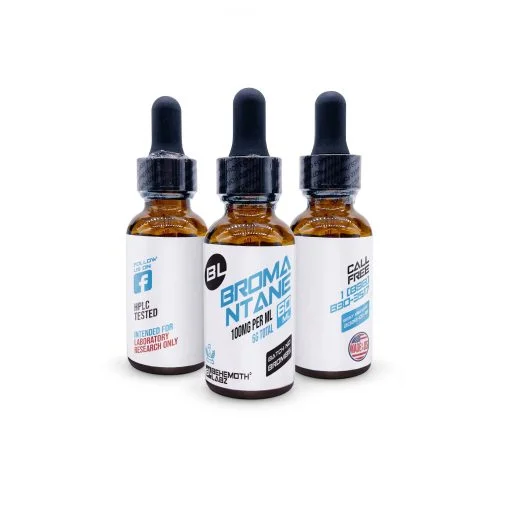
What is Bromantane?
Bromantane, sold under the trade name Ladasten and also known by its developmental designation ADK-709, is a synthetic small molecule belonging to the adamantane chemical family. Its systematic name is N-(4-bromophenyl)adamantan-2-amine — a compound formed from the adamantane tricyclic cage structure coupled with a 4-bromophenyl amine substituent. This structural combination places Bromantane within the same compound class as amantadine and memantine, both well-characterised CNS-active adamantane derivatives.
Bromantane was originally developed during the Soviet era as part of a military pharmacology programme investigating actoprotectors — a class of synthetic adaptogens designed to maintain physical and cognitive performance under conditions of prolonged physical and environmental stress. The compound was classified as an actoprotector, a pharmacological designation distinct from classical stimulants, referring to compounds investigated for their capacity to sustain performance parameters under physiological load without the typical exhaustion of energy reserves associated with conventional stimulants.
In Russia, Bromantane is approved under the Ladasten designation as a prescription medicine for neurasthenia — a clinical classification covering asthenic and fatigue-related disorders. Outside Russia, Bromantane carries no regulatory approval for any human or veterinary use. In the United States, it is unscheduled, meaning it is not a controlled substance under the Controlled Substances Act, though it is not approved by the FDA for any application. BehemothLabz supplies Bromantane as a research compound for laboratory use only.
ATTENTION: This product is strictly for LABORATORY AND RESEARCH PURPOSES ONLY. Not for human or veterinary use.
How Bromantane Works — Mechanism of Action
Bromantane’s precise mechanism of action has not been fully characterised in the published literature, and its pharmacological profile is described as atypical relative to classical stimulants such as amphetamine. Research suggests the compound’s activity is dependent on interactions with dopaminergic and serotonergic neurotransmitter systems, though the specific receptor-level and transporter-level mechanisms remain under investigation.
In preclinical animal studies, Bromantane administration was associated with significant increases in striatal dopamine release, as measured by in vivo microdialysis in freely moving rats. This dopamine release was prolonged — lasting approximately 8 hours in the experimental model — and was partially inhibited by tetrodotoxin perfusion, suggesting a neuronal activity-dependent component to the release mechanism. Concurrently, extracellular dopamine metabolite levels (3,4-dioxyphenylacetic acid and homovanillic acid) were slightly decreased, which has been interpreted as suggesting reduced dopamine turnover rather than simple reuptake inhibition [Kudrin et al., 1995].
Separately, research has investigated Bromantane’s interactions with serotonergic parameters. In rodent models, bromantane was associated with increased 5-HT and 5-HIAA content in the frontal cortex, with delayed increases in subcortical regions, and a stable decrease in cerebellar 5-HT and 5-HIAA levels. This regional specificity in serotonergic modulation distinguishes Bromantane’s neurochemical profile from compounds with uniform serotonin reuptake inhibition. The combination of dopaminergic and serotonergic system interactions is proposed to underlie both the stimulant and anxiolytic properties observed in experimental pharmacological testing.
Research Overview — What the Studies Have Examined
Published research on Bromantane spans preclinical animal pharmacology, mechanistic neurochemistry studies, and a limited body of Russian clinical investigation. Research has classified Bromantane within two overlapping pharmacological categories: actoprotector (synthetic adaptogen), referring to its investigated capacity for performance maintenance under stress conditions; and anxiolytic-stimulant, referring to the co-occurrence of CNS stimulant and anxiety-reducing properties in preclinical pharmacological characterisation.
Based on articles retrieved from PubMed, the most clinically significant published dataset for Bromantane comes from a large-scale, multi-centre clinical trial conducted across 28 clinical centres in Russia involving 728 patients diagnosed with asthenic disorders and psychoautonomic syndrome. Patients received Ladasten (Bromantane) at daily doses of 50 mg or 100 mg over 28 days. Assessed using CGI-S and CGI-I psychometric scales at baseline and at days 3, 7, 14, and 28, the study reported a responder rate of 76.0% on the CGI-S and 90.8% on the CGI-I. Antiasthenic effects were observed from day 3 of administration and persisted for one month post-discontinuation in assessment. Adverse effects were observed in 3% of patients, with therapy discontinued in 0.8%. No serious adverse effects were identified [Voznesenskaia et al., 2010].
Note: This trial was conducted in Russia under approved clinical protocols and cannot be directly extrapolated to research-grade compound studies outside that regulatory context. The trial data are cited here for scientific and historical context regarding the compound’s pharmacological characterisation.
Preclinical rodent research has also examined Bromantane in models of physical exhaustion, immunomodulation, and cognitive performance. Animal model studies have investigated effects on swimming endurance, hypoxia tolerance, and locomotor activity under various pharmacological and physical challenge paradigms. Bromantane has also been examined in gene expression studies using macroarray hybridisation, which identified differential expression of 12 genes in the rat brain following Ladasten administration — changes proposed to relate to its anxiolytic and mood-stabilising properties in those experimental contexts. Research in this area is primarily from Russian academic institutions and remains largely outside the mainstream English-language peer-reviewed database.
Available Forms of Bromantane for Research
Bromantane is available in several research formulations, each suited to different laboratory applications and experimental delivery requirements.
- Bromantane Capsules are the most common research formulation and represent the standard format for oral bioavailability studies. Bromantane has a documented oral bioavailability of approximately 42% in pharmacokinetic studies. Capsule formulations allow precise weighed dosing for comparative research protocols and are suitable for in vitro dissolution studies and comparative pharmacokinetic work.
- Bromantane Nasal Spray formulations are available for intranasal delivery studies, where the nasal mucosa route is investigated for altered bioavailability or delivery kinetics relative to oral administration. Bromantane nasal spray is of interest in preclinical delivery research given the compound’s lipophilicity and known CNS penetrance.
- Bromantane Powder and Liquid formats are used in laboratory settings requiring custom formulation, solubility testing, or incorporation into experimental media. Bromantane is soluble in ethanol and organic solvents and exhibits limited solubility in water — a relevant parameter for in vitro experimental design.
Researchers looking to buy bromantane in any of these formats will find all three formulations available through BehemothLabz for laboratory and research use only.
Research Dosing Protocols
Published research involving Bromantane has used a range of doses across preclinical and clinical investigational settings. The following is a reference summary of doses documented in the scientific literature — it is provided strictly as a research reference and does not constitute dosing guidance, medical advice, or any form of administration recommendation for human use.
In the large-scale Russian clinical trial of Ladasten for asthenic disorders, the study protocol used daily oral doses of 50 mg or 100 mg administered over 28 days in 728 patients under physician supervision and approved institutional protocols. Antiasthenic effects were noted from day 3.
In preclinical rodent pharmacology studies, Bromantane has been administered at doses ranging from 10 mg/kg to 50 mg/kg orally in acute and chronic paradigms. Microdialysis studies examining dopamine release dynamics used 50 mg/kg oral administration in Wistar rats, with the dopamine release effect sustained for approximately 8 hours post-administration in that experimental model.
In performance and endurance animal model research, doses in the 10–25 mg/kg range have been examined in rodent swimming and exhaustion challenge paradigms. These doses are specific to the animal model context and cannot be extrapolated to any human exposure scenario.
All dose data above is derived from published preclinical and clinical investigational research. Researchers must design experimental protocols in compliance with applicable IRB and IACUC requirements. None of the above constitutes a recommendation for human administration of any kind.
Side Effects and Safety Considerations from Research
Published research and clinical trial data have documented the following safety-relevant observations for Bromantane/Ladasten. This information is provided for scientific reference and is not medical advice.
In the 728-patient Russian clinical trial, adverse effects were reported in approximately 3% of participants. The most commonly reported adverse events included mild insomnia, headache, and irritability — consistent with the known stimulant activity of the compound. Treatment was discontinued in 0.8% of patients due to adverse effects. No serious adverse effects were identified in that trial population over the 28-day treatment period.
In informal reports from research contexts, sleep disruption is the most frequently cited adverse observation and is typically associated with late-day administration in the research setting. This aligns with the compound’s documented elimination half-life of approximately 11.21 hours in human pharmacokinetic studies, meaning late administration may result in active compound levels during sleep architecture periods.
As with all CNS-active compounds, there is potential for habituation or tolerance development with repeated exposure, though formal dependency or withdrawal studies for Bromantane are limited in the published record. Some informal reports have noted irritability upon discontinuation, though this has not been formally characterised in controlled research settings.
Researchers and qualified professionals should conduct a thorough compound review before any research protocol involving this compound. This information is for laboratory research reference only.
Where to Buy Bromantane
When sourcing Bromantane for laboratory research, key quality indicators to verify include: HPLC-confirmed purity at ≥99% or higher, independent third-party purity verification rather than self-certification, USA manufacture to research-grade standards, and batch-specific Certificate of Analysis documentation available per lot.
BehemothLabz meets all of these criteria. Research-grade bromantane from BehemothLabz is independently third-party tested, HPLC-verified at ≥99% purity, USA-made, and supplied with a batch-specific Certificate of Analysis available for every production lot.
BehemothLabz supplies Bromantane strictly for laboratory and research use only. All orders are accompanied by documentation confirming research-grade standards.
Buy bromantane for sale from BehemothLabz — USA-made, independently tested, research grade.
ATTENTION: This product is strictly for LABORATORY AND RESEARCH PURPOSES ONLY. Not for human or veterinary use.
Properties of Bromantane (Ladasten)
| Property | Detail |
| Molecular Formula | C₁₆H₂₀BrN |
| Molecular Weight | 306.24 g/mol |
| CAS Number | 87913-26-6 |
| PubChem CID | 4660557 |
| IUPAC Name | N-(4-bromophenyl)adamantan-2-amine |
| Synonyms | Ladasten, Bromantan, ADK-709, N-(2-Adamantyl)-4-bromoaniline, N-(4-Bromophenyl)-2-adamantanamine |
| Compound Class | Adamantane derivative; actoprotector; atypical CNS stimulant/anxiolytic |
| Physical Form | White to off-white powder |
| Solubility | Soluble in ethanol and organic solvents; limited solubility in water |
| Oral Bioavailability | ~42% (documented in pharmacokinetic studies) |
| Elimination Half-Life | ~11.21 hours (human); ~7 hours (rat) |
| Storage | Cool, dry, sealed; protected from light and moisture |
| WADA Status | PROHIBITED — Listed under S6.b Specified Stimulants, WADA 2026 Prohibited List. Prohibited in-competition. This product must not be used in any context involving athletic competition or human subjects under anti-doping jurisdiction. |
Risk and Handling Information
Risk Tier: MODERATE — CNS-Active Small Molecule, Dopaminergic/Serotonergic Activity
Bromantane is a pharmacologically active CNS compound with documented monoaminergic activity in preclinical models. Its oral bioavailability (~42%) and lipophilicity mean that uncontrolled exposure carries a meaningful risk of systemic pharmacological activity. All handling must be conducted under appropriate laboratory safety conditions.
Exposure Risk
Bromantane powder presents an inhalation hazard during weighing and handling. All procedures must be performed inside a certified fume hood. N95 respiratory protection is required. Nitrile gloves, a lab coat, and safety eyewear are mandatory. Skin contact must be avoided — the compound is soluble in organic solvents and may penetrate skin when dissolved.
CNS and Monoaminergic System Risk
As a compound with documented dopaminergic and serotonergic activity in preclinical models, uncontrolled human exposure carries uncharacterised risks of CNS pathway engagement, including monoamine system perturbation. Any accidental exposure must be treated as a potential pharmacological event and managed per institutional first-aid and incident reporting protocols.
WADA Prohibition
Bromantane is listed on the WADA 2026 Prohibited List under S6.b (Specified Stimulants). It is prohibited in competition for all athletes under anti-doping jurisdiction. This product must not be used in any context involving athletic competition or human subjects under WADA, USADA, or equivalent jurisdiction.
Storage Risk
Store at cool, dry conditions in sealed containers, protected from light and moisture. Bromantane is stable under recommended storage conditions. Avoid prolonged exposure to heat or humidity, which may affect compound integrity.
Disposal
All residual material, containers, and contaminated consumables must be disposed of in full compliance with applicable institutional chemical waste regulations.
Frequently Asked Questions
Q: What is Bromantane?
A: Bromantane (trade name Ladasten) is a synthetic small molecule belonging to the adamantane chemical family. It is classified as an actoprotector — a category of synthetic adaptogens originally investigated in Soviet-era military pharmacology research for performance maintenance under stress conditions. Chemically, it is N-(4-bromophenyl)adamantan-2-amine, CAS 87913-26-6. It is approved as a prescription medicine in Russia for neurasthenia, but carries no FDA approval for any use in the United States. BehemothLabz supplies it for laboratory research purposes only.
Q: Is Bromantane the same as Ladasten?
A: Yes. Ladasten is the Russian trade name for Bromantane. Both names refer to the same compound — N-(4-bromophenyl)adamantan-2-amine, CAS 87913-26-6, PubChem CID 4660557. Ladasten was the designation under which the compound was studied in Russian clinical trials and subsequently approved as a prescription medicine in Russia for the treatment of neurasthenic and asthenic disorders. Outside Russia, the compound is known primarily by the name Bromantane.
Q: Where can I buy Bromantane?
A: Bromantane for laboratory and research use is available from BehemothLabz. BehemothLabz supplies research-grade bromantane that is USA-made, independently third-party HPLC tested at ≥99% purity, and accompanied by a batch-specific Certificate of Analysis. All orders are for laboratory research use only. Visit BehemothLabz.com to view current stock and formulation options.
Q: What forms does Bromantane come in?
A: Bromantane is available in several research formulations, including bromantane capsules, bromantane nasal spray, and bromantane powder or liquid formats. Capsule formulations are standard for oral bioavailability and pharmacokinetic research. Nasal spray formulations are used in intranasal delivery and comparative bioavailability studies. Powder and liquid formats are used for custom formulation, solubility testing, and in vitro laboratory work. All forms are supplied for research use only.
Q: Is Bromantane legal?
A: In the United States, Bromantane is not a scheduled controlled substance under the Controlled Substances Act and is therefore not illegal to purchase or possess for legitimate research purposes. It is not approved by the FDA for any human or veterinary use. However, Bromantane is listed on the WADA 2026 Prohibited List under S6.b (Specified Stimulants) and is prohibited in-competition for athletes subject to anti-doping rules. Researchers should verify the regulatory status applicable to their jurisdiction before purchasing. BehemothLabz supplies this compound for laboratory research purposes only.
Q: Where is BehemothLabz Bromantane made?
A: BehemothLabz Bromantane is USA-made. All BehemothLabz products are manufactured in the United States to research-grade standards. Independent third-party laboratory testing is conducted on every production batch before release.
Q: What is the purity of Bromantane from BehemothLabz?
A: BehemothLabz Bromantane is verified at ≥99% purity by independent third-party HPLC analysis. A Certificate of Analysis is available for every production lot and is not a generic representative document. Contact support@behemothlabz.com to request batch-specific documentation.
Q: Does Bromantane expire?
A: Bromantane, like all research compounds, has a defined shelf life that depends on storage conditions. When stored correctly — in sealed containers in a cool, dry environment protected from light and moisture — Bromantane maintains compound integrity for a minimum of 24 months as a powder form. Exposure to heat, humidity, or light accelerates degradation. BehemothLabz provides shelf life and storage guidance on all product documentation. Researchers should verify batch-specific stability data from the Certificate of Analysis before use.
Why Choose BehemothLabz to Buy Bromantane?
Behemoth Labz supplies Bromantane for laboratory and research use only. Each batch undergoes independent third-party HPLC analysis, confirming purity at ≥99%. A Certificate of Analysis is available for every production lot and is not a generic representative document. BehemothLabz does not self-certify purity, and external laboratories verify each lot before release. All formulations — capsules, nasal spray, and powder — are USA-made to research-grade standards. Contact support@behemothlabz.com for documentation or research enquiries.
Disclaimer
Please make sure you go through the Terms and Conditions and familiarize yourself with them, as it is important. Please research the scientific uses of this product before making any purchases. Make note that the packaging and labels of the product may differ from those shown on the website. All research involving this compound must comply with IRB guidelines for clinical investigations and IACUC directives for animal studies under the Animal Welfare Act (AWA).
Buying the product means you agree to our Terms and Conditions. You can contact our customer service team at support@behemothlabz.com if you are not fully satisfied with the product.
ATTENTION: All BehemothLabz products are strictly for LABORATORY AND RESEARCH PURPOSES ONLY. They are not to be used for any human or veterinary purposes.
Reference Links
Kudrin, V. S., Sergeeva, S. A., Krasnykh, L. M., Miroshnichenko, I. I., Grekhova, T. V., & Gaĭnetdinov, R. R. (1995). The effect of bromantane on the dopamin and serotoninergic systems of the rat brain. Eksperimental’naia i Klinicheskaia Farmakologiia, 58(4), 8–11. https://pubmed.ncbi.nlm.nih.gov/7580761/
Voznesenskaia, T. G., Fokina, N. M., & Iakhno, N. N. (2010). Treatment of asthenic disorders in patients with psychoautonomic syndrome: results of a multicenter study on efficacy and safety of ladasten. Zhurnal Nevrologii i Psikhiatrii imeni S.S. Korsakova, 110(5 Pt 1), 17–26. https://pubmed.ncbi.nlm.nih.gov/21322821/