

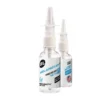
$104.34
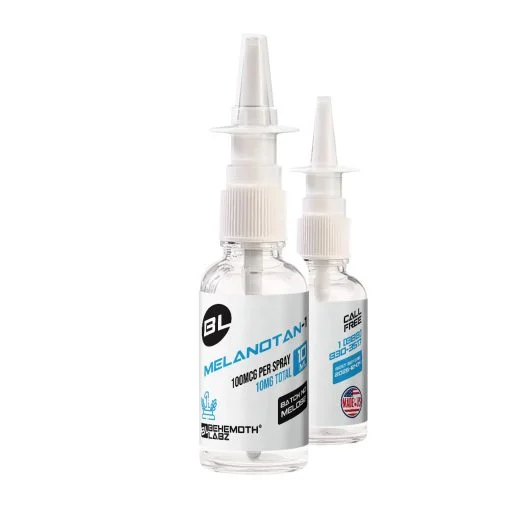
MT1 nasal spray — also known as Melanotan 1 or afamelanotide — is a synthetic 13-amino acid analog of alpha-melanocyte-stimulating hormone (α-MSH), formulated for laboratory and preclinical research use. BehemothLabz supplies this compound as a research-grade nasal spray for investigators studying MC1R receptor pharmacology, melanogenesis signaling, and pigmentation biology in controlled experimental settings.
As a selective melanocortin 1 receptor (MC1R) agonist, afamelanotide is applied in experimental settings to probe the cAMP-mediated melanogenesis cascade — the intracellular signaling pathway through which MC1R governs pigmentation biology in melanocyte cell models. The nasal delivery format provides a controlled, reproducible route of administration for in vitro and preclinical study protocols.
Physicochemical Profile
| Property | Detail |
|---|---|
| Molecular Formula | C₇₈H₁₁₁N₂₁O₁₉ |
| Molecular Weight | 1,646.87 g/mol |
| CAS Number | 75921-69-6 |
| PubChem CID | 16154396 |
| Peptide Sequence | Ac-Ser-Tyr-Ser-Nle-Glu-His-D-Phe-Arg-Trp-Gly-Lys-Pro-Val-NH₂ |
| Synonyms | Afamelanotide · NDP-α-MSH · NDP-MSH · [Nle4,D-Phe7]-α-MSH · Melanotan I · MT-I · MT-1 · CUV1647 |
| Peptide Class | Synthetic 13-AA linear α-MSH analog; MC1R selective agonist |
| Vial Size | 10 mg (100 mcg per spray) |
| Form | Nasal Spray |
| Purity | ≥99% (HPLC, independent third-party verified) |
| Shelf Life | ≥24 months lyophilized under recommended conditions |
| Storage | −20°C; protect from light and moisture |
| WADA Status | S2 Prohibited (in- and out-of-competition) |
| Research Use | Laboratory use only — not for human or veterinary use |
How Does MT1 (Melanotan 1) Interact with MC1R?
MT1 (afamelanotide) is a potent, selective agonist of the melanocortin 1 receptor (MC1R) in experimental models. MC1R is a G-protein-coupled receptor expressed primarily on melanocytes. Upon MT1 binding, the receptor activates adenylyl cyclase, converting ATP to cyclic adenosine monophosphate (cAMP). Elevated intracellular cAMP then drives the following cascade, as characterised in Mel-Ab and B16 melanocyte cell line preparations:
MC1R → cAMP → PKA → CREB Phosphorylation → MITF Upregulation → Tyrosinase Expression
Picture it this way: MT1 docks at the extracellular binding pocket of MC1R, triggering a conformational shift that couples the receptor to the Gαs protein. Adenylyl cyclase is activated at the intracellular face. cAMP floods the cytoplasm. PKA is released from its regulatory subunits, migrates to the nucleus, and phosphorylates CREB at Ser-133. Phosphorylated CREB binds the CRE motif in the MITF promoter. MITF expression rises. Tyrosinase — the rate-limiting enzyme in melanin biosynthesis — is transcribed.
This complete signaling cascade is the established mechanistic framework within which MT1 is investigated across multiple independent research groups.
How Does MT1 Differ from Native α-MSH?
Native α-MSH has an estimated half-life of approximately 10 minutes in vivo, owing to rapid proteolytic degradation at susceptible amino acid residues. MT1’s two structural modifications address this limitation directly:
- Nle4 substitution — replaces the oxidation-prone methionine at position 4 with norleucine, a structurally similar but metabolically stable residue
- D-Phe7 substitution — introduces a D-amino acid configuration at position 7, sterically hindering peptidase access and extending biological activity in preclinical models
Together, these modifications produce a compound approximately 26-fold more potent than native α-MSH in adenylyl cyclase assay systems, making MT1 the preferred reference compound in MC1R pharmacology and melanogenesis pathway research.
MT1 vs MT2 — Research Comparison
| Feature | MT1 (Melanotan 1) | MT2 (Melanotan 2) |
|---|---|---|
| Chemical Name | Afamelanotide | Melanotan II |
| Structure | Linear 13-AA peptide | Cyclic 7-AA peptide |
| CAS Number | 75921-69-6 | 121062-08-6 |
| Molecular Weight | 1,646.87 g/mol | 1,024.18 g/mol |
| Primary Receptor Target | MC1R (selective) | MC1R, MC3R, MC4R, MC5R (non-selective) |
| Primary Research Focus | Melanogenesis · MC1R pharmacology | Multi-receptor melanocortin signaling |
| Regulatory Status | FDA-approved as Scenesse (EPP indication) | Not approved |
| WADA Status | S2 Prohibited | S2 Prohibited |
MT1’s structural linearity and MC1R selectivity distinguish it from MT2, whose cyclic architecture and multi-receptor engagement profile make it a different research tool for melanocortin system studies.
Research Applications of MT1 Nasal Spray
As a selective MC1R agonist with documented receptor binding affinity and metabolic stability, MT1 occupies a defined position across intersecting preclinical research domains.
MC1R Receptor Pharmacology
Within melanocortin receptor pharmacology, MT1 is applied as a reference agonist in studies characterising MC1R binding kinetics, receptor occupancy, and G-protein coupling efficiency. Its 26-fold potency advantage over native α-MSH and defined structural modifications (Nle4, D-Phe7) allow researchers to establish precise dose-response relationships in receptor activation assays. Mel-Ab and B16 melanocyte cell lines serve as primary experimental models.
cAMP-Mediated Melanogenesis Pathway Studies
The MC1R → cAMP → PKA → CREB → MITF → tyrosinase cascade is the primary research framework for MT1 investigations. Researchers apply MT1 in laboratory studies examining how MC1R gene polymorphisms affect cAMP signaling efficiency and downstream eumelanin/pheomelanin ratio shifts, though findings vary across experimental models and data remain limited.
Eumelanin/Pheomelanin Ratio Research
Research has suggested that defective MC1R signaling — resulting from receptor gene mutations — may shift pigmentation toward pro-oxidant pheomelanin at the expense of eumelanin in preclinical models. MT1 is used in laboratory settings to investigate how selective MC1R agonism may modulate this ratio, with attention to the downstream oxidative stress implications of pheomelanin predominance. Observed associations are not consistent across all models (Böhm, 2026).
Antimelanogenesis Pathway Comparison Studies
MT1 serves as the positive control reference compound in studies screening inhibitors of the melanogenesis pathway. Research examining compounds such as Theasinensin A uses established MC1R → tyrosinase cascade methodology in B16 cell models (Lim et al., 2021) — the same framework within which MT1 activity is characterised. MT1 provides the receptor-activation benchmark against which pathway inhibition is measured.
Nasal Delivery Pharmacokinetics Research
The nasal spray format is itself a research variable in peptide delivery studies. Intranasal administration bypasses first-pass hepatic metabolism and offers a controlled route for preclinical bioavailability investigations, making the formulation relevant to peptide mucosal delivery and pharmacokinetic research protocols.
What Are the Risks and Limitations of MT1 Research?
- Handling Precautions: MT1 nasal spray should be handled by trained laboratory personnel only, in a controlled research environment. Full PPE is mandatory — nitrile gloves, safety eyewear, and a lab coat. All spray handling must be conducted in a ventilated workspace. Avoid all inhalation or nasal contact with spray output during experimental use, and avoid any skin contact with spray output.
- Exposure Risks: MT1 is a synthetic MC1R agonist research peptide that is thought to activate the cAMP-mediated melanogenesis cascade in preclinical models. The nasal spray delivery format increases systemic absorption risk relative to lyophilized powder due to faster potential uptake via the intranasal route. No human safety data exists for this research-grade formulation.
- Storage: Store MT1 nasal spray at −20°C in sealed vials, protected from light and moisture. Once opened, store at 4°C and use within 7 days. Do not allow the spray mechanism to contact non-sterile surfaces. Avoid repeated freeze-thaw cycling.
- Toxicity and Data Limitations: No chronic toxicity data exist for this research-grade formulation of MT1. All mechanistic and pharmacological findings are derived from short-duration preclinical models only. Data remains limited and is not consistent across all experimental systems. MT1 is listed on the WADA 2026 Prohibited List under Section S2 (Peptide Hormones, Growth Factors, Related Substances and Mimetics), prohibited both in-competition and out-of-competition.
Where to Buy MT1 Nasal Spray | BehemothLabz
Researchers sourcing Melanotan 1 for sale should verify that every batch is independently third-party tested for purity and identity, and that a batch-specific Certificate of Analysis — not a generic representative document — is available per lot. BehemothLabz supplies MT1 exclusively for preclinical and in vitro research use — not for consumer, athletic, or clinical application.
- In Stock — MT1 nasal spray available for immediate dispatch to qualified research facilities
- Independent third-party HPLC testing — every production lot, before release
- USA-made to research-grade standards — consistent 100 mcg per actuation
- Fast Shipping for Researchers — orders processed and dispatched promptly upon verification
- Research-use-only labeling compliant with applicable standards
Frequently Asked Questions
What is MT1 nasal spray used for in research?
MT1 nasal spray (afamelanotide) is applied in laboratory settings to study MC1R receptor pharmacology, cAMP-mediated melanogenesis signaling, and pigmentation pathway biology in preclinical models. It is not approved for human or veterinary use.
How is MT1 nasal spray different from MT2?
MT1 is a linear 13-amino acid peptide acting as a selective MC1R agonist — studied primarily for melanogenesis pathway research. MT2 is a shorter, cyclic 7-amino acid peptide engaging MC1R, MC3R, MC4R, and MC5R non-selectively. MT1 holds FDA approval as Scenesse for an unrelated indication; MT2 has no approved indication.
What is the purity of BehemothLabz MT1 nasal spray?
≥99% purity, verified by independent third-party HPLC analysis on every production lot. A batch-specific Certificate of Analysis on Behemoth Labz.
What is the WADA status of MT1?
MT1 (Melanotan 1 / Afamelanotide) is listed on the WADA 2026 Prohibited List under Section S2. It is prohibited both in-competition and out-of-competition for all athletes subject to WADA or equivalent anti-doping jurisdiction.
Is MT1 nasal spray FDA approved?
Afamelanotide is FDA-approved as Scenesse for erythropoietic protoporphyria via a subcutaneous implant. The research-grade nasal spray formulation supplied by BehemothLabz is not the approved clinical preparation and has not been evaluated for safety under uncontrolled conditions.
Where can researchers buy MT1 nasal spray?
MT-I for sale is available at BehemothLabz for qualified laboratory use. Every batch is independently third-party HPLC tested at ≥99% purity with a batch-specific Certificate of Analysis.
References
- Böhm, M. (2026). Hormones and skin pigmentation: fundamentals and clinical relevance. Dermatologie, 77(1), 9–17. https://pubmed.ncbi.nlm.nih.gov/41489668/
- Lim, H. Y., Kim, E., Park, S. H., Hwang, K. H., Kim, D., Jung, Y. J., Kopalli, S. R., Hong, Y. D., Sung, G. H., & Cho, J. Y. (2021). Antimelanogenesis effects of Theasinensin A. International Journal of Molecular Sciences, 22(14), 7453. https://pubmed.ncbi.nlm.nih.gov/34299073/
⚠️ ATTENTION — LABORATORY AND RESEARCH PURPOSES ONLY: MT1 nasal spray (afamelanotide) is strictly for controlled laboratory and investigational research use. Not for human or veterinary use. Not approved by the FDA for any consumer or clinical application outside its approved Scenesse indication. All research must comply with IRB guidelines and IACUC directives under the Animal Welfare Act (AWA). By purchasing, you agree to BehemothLabz Terms and Conditions. For inquiries: support@behemothlabz.com
| Strength | 100mcg per spray/10mg/10ml |
|---|
Related products
Nasal Sprays

Nasal Sprays
Nasal Sprays
Nasal Sprays
Nasal Sprays
Nasal Sprays

Nasal Sprays

Nasal Sprays